




What are RULA/REBA, and how can posture be assessed with AI Vision?
Inspektion engineering team · Published 7 September 2026 · Last updated 14 October 2026
RULA and REBA are tools for assessing risk from working postures. AI Vision may help collect movement data, but the data and criteria must be reviewed together with an assessor.
Summary
- RULA and REBA are tools for assessing risk from working postures that can lead to cumulative injury.
- Both score risk from the angles of various joints, such as the neck, back, arms and wrists.
- AI Vision can help capture joint positions from video, but the results must be reviewed and further data may need to be collected.
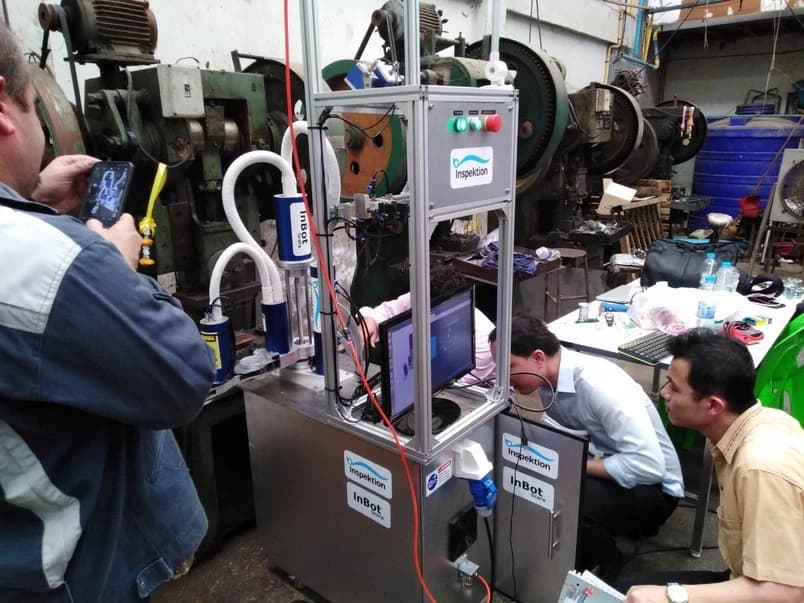
- Inspektion has previously run a workshop teaching these principles to safety teams from the packaging and paper industries.
What are RULA and REBA?
What is RULA?
RULA (Rapid Upper Limb Assessment) is a tool for assessing risk from working postures that focuses on the upper body, such as the neck, back, shoulders and arms, scoring according to the angle of each joint [1]
What is REBA?
REBA (Rapid Entire Body Assessment) is a risk assessment tool that covers the whole body, including the legs and balance. It is better suited than RULA to work involving whole-body movement [2]
Why safety teams should care
Cumulative injuries from repetitive working postures (such as back pain and shoulder pain) often show no immediate symptoms, but they build up over time into a long-term problem. Safety teams therefore need a tool for assessing risky working postures systematically, rather than simply judging them by eye.
How AI Vision helps assess posture
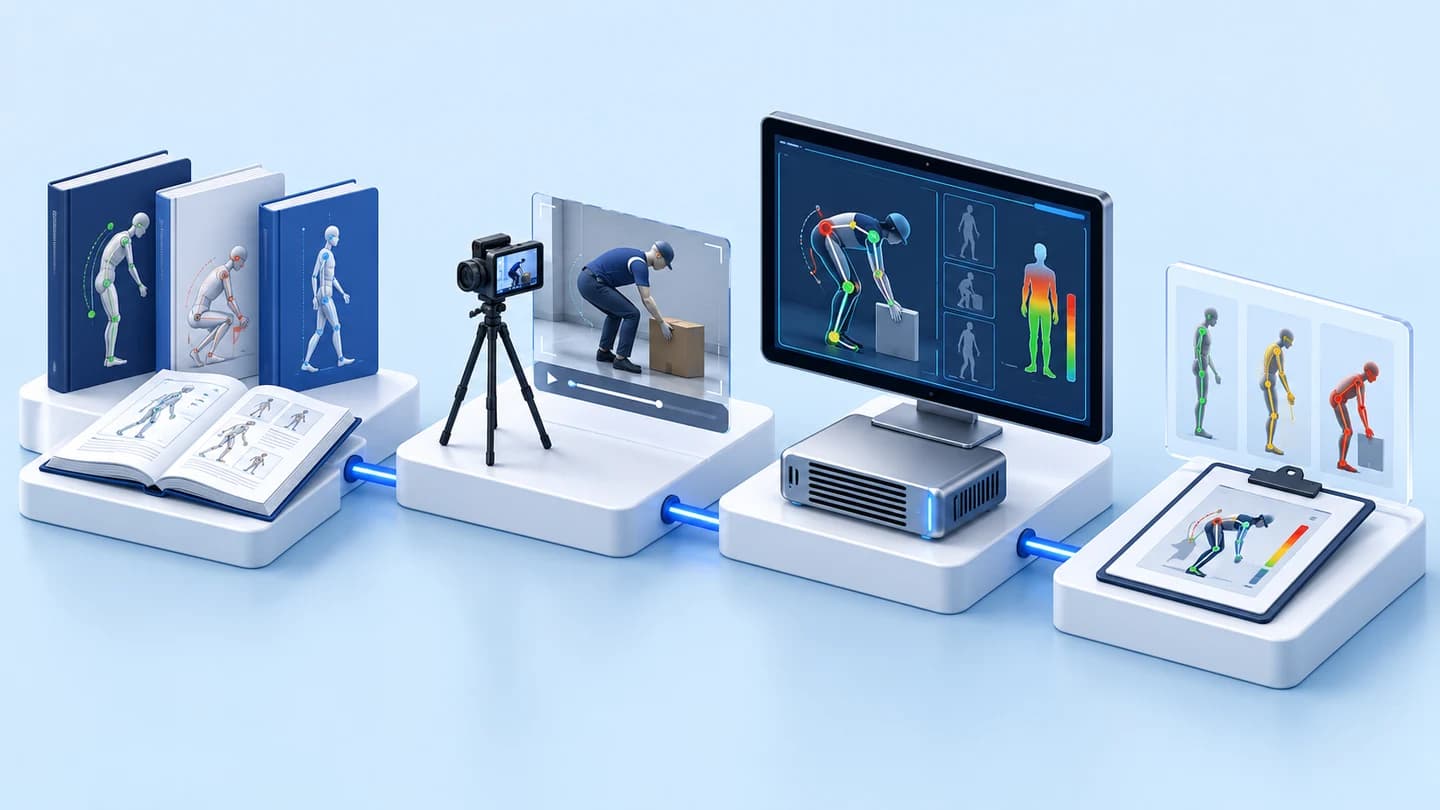
AI Vision may help identify joint positions and collect movement data from video, whereas a RULA/REBA assessment requires all the data its criteria call for and review by an assessor. Joint angles from a camera alone should not be treated as a confirmed assessment result.
Examples of our real work
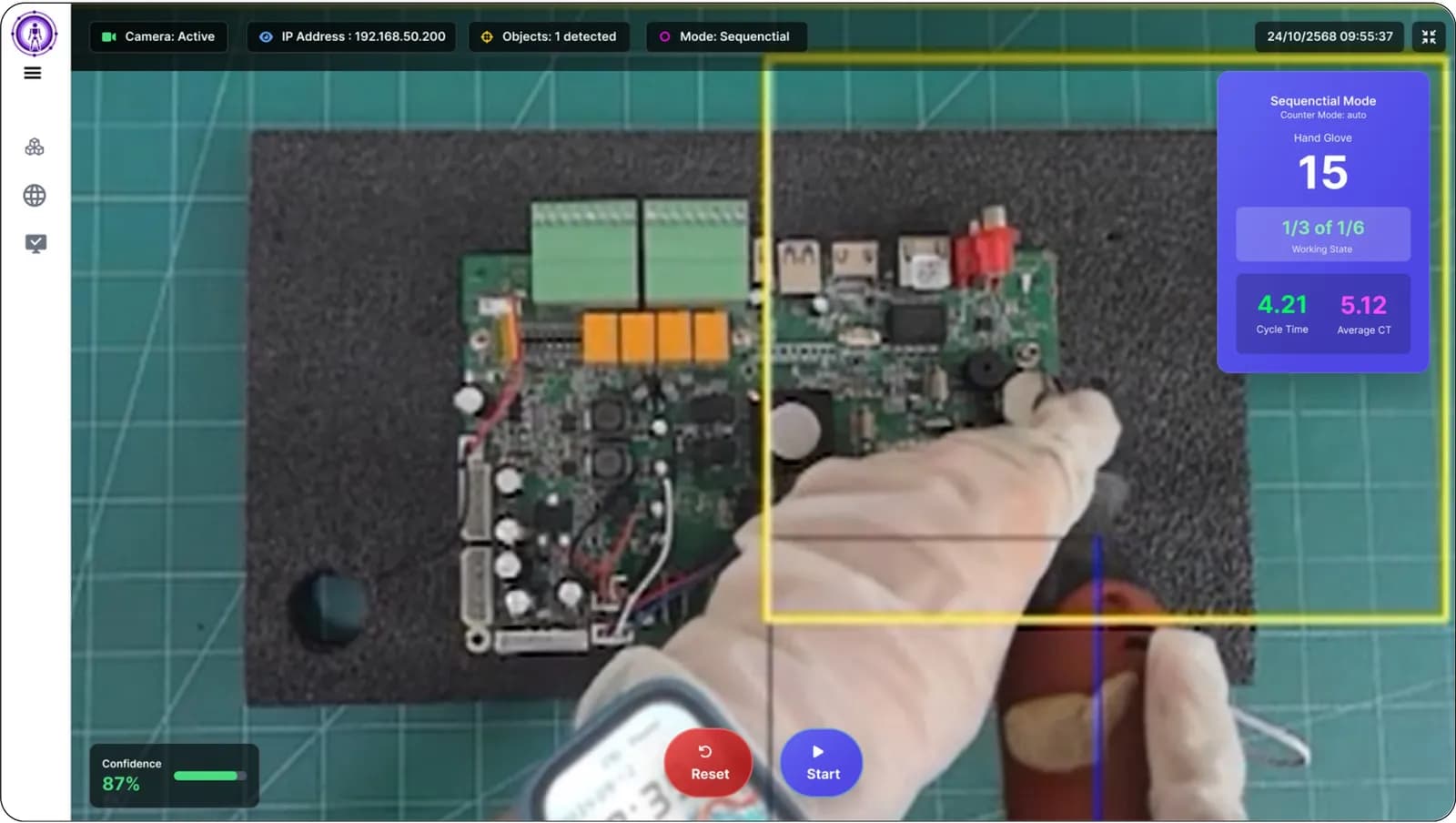
We ran a Humanoid & Ergonomics workshop explaining RULA/REBA/NIOSH, with a case study on AI cameras that count work cycles. Participants practised rough risk scoring and prioritising the tasks that should be improved, with teams from the packaging industry and a paper core manufacturer taking part (view the case) — training details
Frequently Asked Questions
How do you choose between RULA and REBA for a given job?
RULA suits work that mainly uses the upper body, such as assembly done seated or standing in one place. REBA suits work involving more whole-body movement, such as lifting or walking around.
Do employees need to wear sensors?
No — the AI Vision system analyses video shot with an ordinary camera, so employees do not need to wear any additional equipment.
Can this course be run for our organisation?
Yes — see the details at [AI and Technology Training](/services/training), or contact the team to ask about a course tailored to your organisation.
References
- [1]
RULA: A Survey Method for the Investigation of Work-Related Upper Limb Disorders — Applied Ergonomics (McAtamney & Corlett, 1993)
- [2]
Rapid Entire Body Assessment (REBA) — Applied Ergonomics (Hignett & McAtamney, 2000)
- [3]
Applications Manual for the Revised NIOSH Lifting Equation — NIOSH (CDC)