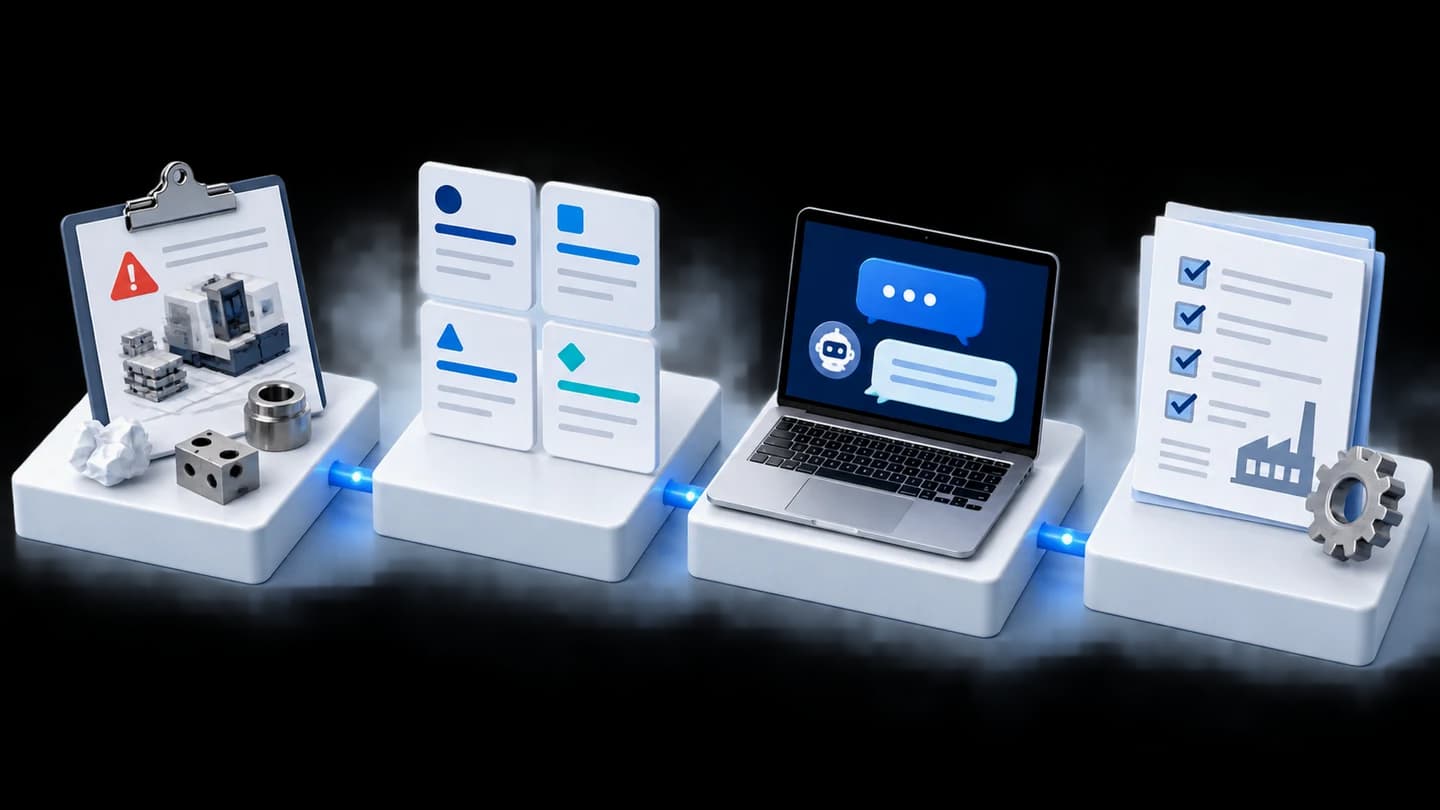
Ergonomics and humanoid robotics workshop for factory teams: RULA/REBA/NIOSH and prioritizing high-risk tasks
We designed and taught this 1-day workshop to help factory teams use RULA, REBA and NIOSH assessment tools and prioritize risky tasks. It also covered deciding whether to improve workstations, use lifting aids, or consider robots. Held in 2026, the workshop had 5 participant groups, including teams from packaging and paper-core manufacturers.
- Industry
- Services
- Year
- 2026
- Scope of work
- Designed the course and slides in 2 parts and 3 sets of activity worksheets, and served as trainer for a 1-day workshop (4 September 2026) for 5 groups of participants.
- Duration
- 1 day
Summary
- We designed the course and served as trainer for a 1-day ergonomics workshop on 4 September 2026. Participants were divided into 5 groups, including teams from a packaging plant and a paper core manufacturer.
- The first part teaches RULA and REBA (posture scoring) and the NIOSH Lifting Equation (calculating the recommended lifting weight and the Lifting Index).
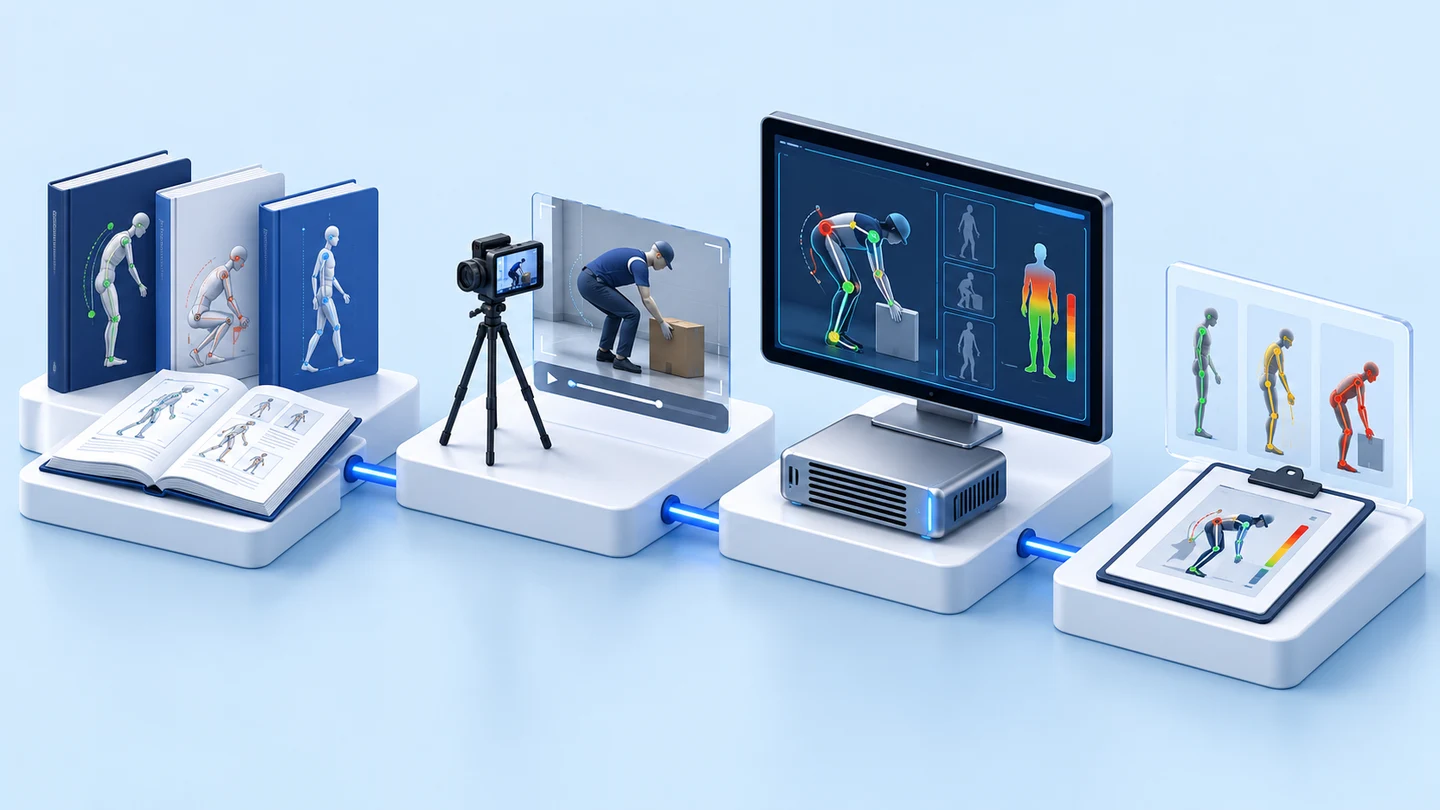
- The case study in the slides uses AI Vision cameras to count actual work cycles throughout the shift, so that frequency values come from counting rather than estimating. The in-room activities used values estimated by the participants themselves.
- The frequency and risk matrix sorts jobs into 4 boxes: consider robots first, adjust the workstation, use lifting aids, and leave for now.
- All 5 groups submitted worksheets for Activity 2 and the final activity. In Activity 2, the groups' naked-eye scores for risky postures did not agree.
The on-site brief
The brief set by the course was this: many factories know there are jobs where employees complain of back or shoulder pain, but they still cannot say with figures which job carries more risk and should be fixed first. Traditional assessment requires someone to stand, observe and take notes by hand, so the data covers only certain periods and certain people.
What we did
We designed the course "Humanoid and Ergonomics for Modern Industry" in 2 parts. The first part teaches RULA, REBA and the NIOSH Lifting Equation, with a case study of using AI Vision cameras to count actual work cycles throughout the shift. The second part teaches placing jobs on a frequency and risk matrix to choose between adjusting the workstation, lifting aids or robots, with 3 group activities woven into the content.
Results
All 5 participant groups submitted worksheets for Activity 2 and the final activity. In the final activity, each group estimated frequency, gave a rough risk score of 1–10, then placed jobs on the matrix to choose which to fix first. We have no data on use after the training, so we report only what is in the worksheets.
How the brief came about
The aim of this workshop was to choose which risky jobs to fix first using figures, not feelings.
MSDs (Musculoskeletal Disorders, meaning work-related injuries to muscles and bones) do not happen in a single day like accidents; they build up over years before symptoms appear. The costs are therefore invisible at first: sick leave, lower productivity, loss of skilled workers, and the expense of having to rework production lines later.
This course also answers the question of which jobs Humanoid robots (robots shaped like people) and Cobots (robot arms that can work alongside people) should be used for. The course's answer starts with data on the job, and only then chooses the solution.
Requirements and constraints
We designed this course to finish in 1 day and to let participants start measuring jobs without needing a budget yet. The requirements and constraints used in designing the course were as follows.
- Time: 1 day, divided into 2 parts. The first part covers the problem and measurement; the second covers handing work over to robots.
- Participants came from different companies and were divided into 5 groups, so activities had to use jobs that each person knew from their own workplace.
- The final activity's worksheet allowed participants to estimate frequency themselves if they did not yet have real figures, and to give a rough risk score of 1–10. The camera data was a case study in the slides, not data that participants used in the activities.
- In 2026, Humanoid robots are still almost entirely pilot projects, so the course also offers options that do not require buying a robot.
- When people and robots work in the same area, the safety standards ISO 10218 and ISO/TS 15066 must be referenced.
Why this workshop has you measure jobs before considering robots
Because choosing which job to fix requires 2 figures: frequency and risk. Without these two figures, choosing a robot or equipment is guesswork. The course therefore sets out 3 steps: measure so the problem is visible, fix it through engineering, then consider robots only for jobs that remain risky and frequent enough.
Tools such as RULA, REBA and NIOSH are already reliable. The problem lies in the data fed into them. If the frequency figure comes from an estimate, the assessment result is an estimate too. With figures from actual counting, the engineering team can show management clearly which job to invest in fixing first.
- 1
Identify jobs where employees complain of aches and pains
In the first activity, each person writes down jobs or workstations from their own workplace where employees often complain of aches and pains, where it hurts, and how many times per hour the job is done. This list is used again in the final activity.
- 2
Try assessing with the naked eye first
Each group looks at pictures of two kinds of job, a bus driver and a street sweeper, then scores the risk by eye alone. This activity shows that judging by feel gives inconsistent answers.
- 3
Learn the standard tools
RULA scores upper-body posture. REBA covers the whole body, including the legs and balance. The NIOSH Lifting Equation calculates the recommended lifting weight from reach distance, height, lifting distance, twisting, frequency and type of grip, then compares it with the actual weight as the Lifting Index (LI).
- 4
Review a case study of AI cameras collecting the figures
In the case study presented, AI Vision cameras (cameras that analyse images with AI) time each step and count actual work cycles throughout the shift without disturbing operators. The counted frequency values are used in the NIOSH equation and to support RULA scoring, instead of estimates from supervisors.
- 5
Place jobs on the matrix and choose which to fix first
In the final activity, each group chooses 2–3 jobs from the list on the board, estimates their frequency, gives a rough risk score of 1–10, then places them on the matrix in the table below.
The frequency and risk matrix used in the workshop
| Job frequency | High risk | Low risk |
|---|---|---|
| Frequent | Consider robots first | Adjust workstation according to ergonomics principles |
| Infrequent | Use lifting aids | Leave for now |
What is the Lifting Index (LI)?
The Lifting Index is the actual weight lifted divided by the recommended lifting weight (RWL) from the NIOSH equation. A value not exceeding 1 is considered acceptable. The further it goes above 1, the further the job exceeds the safe limit. This value is the one figure that engineers and management can both use to speak the same language.
Deliverables
We delivered a 1-day course designed entirely in-house and served as trainer throughout the day. The deliverables were as follows.
- The "Humanoid and Ergonomics for Modern Industry" course and slides, in 2 parts
- 3 sets of activity worksheets: identifying jobs employees complain about, scoring risky postures with the naked eye, and placing jobs on the matrix
- A case study of using AI Vision cameras to count actual work cycles throughout the shift
- Safety precautions when people and robots work together, in line with ISO 10218 and ISO/TS 15066
- Steps for starting to measure at real workstations, which can be done without a budget yet, as the closing content of the workshop
AI cameras are not safety systems
Image analysis cameras can help with monitoring, alerting and collecting evidence, but they cannot replace light curtains, door switches or emergency stop circuits. Systems that stop a machine must have certification to machinery safety standards.
Confirmed results from participants' worksheets
The confirmed results of this case are the worksheets submitted by participants. All 5 participant groups submitted worksheets for Activity 2 and the final activity on the day of the training. In Activity 2, some groups saw street sweeping as riskier, while others saw bus driving as riskier.
In the final activity, each group placed jobs on the frequency and risk matrix to choose which to fix first. The figures in the worksheets were values estimated by participants themselves, not values measured by cameras. We have no information on whether each team took the steps to measure at real workstations after the training, so we do not report post-training results.
What we learned
This work offers 3 principles for choosing which risky jobs to fix first, and for running training on this subject.
- Prioritising jobs requires a single set of criteria. In Activity 2, the groups looked at the same set of job pictures yet chose different jobs as riskier. Scoring by eye therefore cannot be used to compare jobs; tools such as RULA, REBA or NIOSH are needed.
- An assessment result is only as reliable as the data fed into it. The figures in the worksheets this time were values estimated by participants themselves. Estimates suit practising the way of thinking in a training room, but actual work cycles should be counted before making an investment decision.
- Activity exercises should come from a list of real jobs from one factory. Participants this time came from different companies, and some groups placed bus driving and office work on the matrix. When running training inside a factory, prepare the factory's job list in advance, so that the matrix results can be put to further use.
How this approach can apply to your factory
You can start the same approach without a budget yet. Begin with a workstation where people often complain of aches and pains, then measure the job before choosing a solution. The table below separates the reusable parts from those that need adapting to the nature of the job and what your factory already has.
Reusable parts and parts that need adapting
| Part of the approach | Reusable | What needs adjusting |
|---|---|---|
| Assessment tools | RULA and REBA for posture, NIOSH Lifting Equation for lifting work | If your job involves no lifting, use RULA or REBA without calculating the LI |
| Frequency values | Count cycles from video at the start and end of the shift | If you need frequency values for the whole shift, use a camera to count cycles, and clearly define the work steps and the area of each step before installation |
| Matrix | Frequency and risk matrix, with the solution for each box | If the team has no shared criteria yet, first agree at what value frequent and high risk begin, then place the jobs |
| Robots | Criteria for choosing jobs to hand over to robots | If people and robots work in the same area, you must assess in line with ISO 10218 and ISO/TS 15066 |
| Training format | 3 sets of group activities woven into the content | If held at a single factory, use the factory's real job list as the activity exercises |
- Suited to factories with lifting, material handling or repetitive same-posture work throughout the shift, such as packing departments, warehouses or assembly lines
- Participants should come from engineering or job design, not just HR, because most fixes lie in the workstation, equipment, frequency and weight
- Prepare in advance a list of jobs or workstations where employees often complain of aches and pains, to use as activity exercises
- If cameras are used to observe working posture, use the data to adjust workstations, not to assess individual employees, and inform employees before installation
Technology used
Frequently Asked Questions
How long does this workshop take, and what activities does it include?
It takes 1 day, divided into 2 sessions, with 3 group activities: pointing out tasks that employees complain leave them aching, scoring risky postures by eye, and placing tasks on a frequency-risk matrix to choose which to fix first.
Do we need a prior grounding in RULA, REBA or NIOSH?
No. The first session explains all three tools, from their principles and scoring methods to reading the Lifting Index value.
What can we start doing straight away after the training?
You can start without any budget yet. Choose a workstation where people often complain of back or shoulder pain, film the actual work at the start and end of the shift, count the actual cycles, calculate the LI value, give it a RULA or REBA score, then place it on the matrix. Doing this for several workstations gives you a first set of documents to take to management.
Do we need to buy a robot or an AI camera after the training?
No. The frequency-risk matrix can be used even if you do not yet have a robot. Many tasks can be fixed by adjusting height, reducing reach or adding lifting aids. A camera, meanwhile, helps you obtain frequency values from actual counting throughout the shift, instead of counting by hand for only parts of it.
Can this workshop be held inside your factory? How much does it cost?
Yes. The price is estimated from the number of participants, the nature of the work in the factory and the content you want to emphasise. Please request a quotation from our team.