




Machine Learning system forecasting transaction anomalies for a Thai financial-sector organization
Customer: Thai financial-sector organization
AIOP System uses Machine Learning to forecast transaction response-time anomalies in a large financial transaction system 5 and 10 minutes ahead, overall, by transaction route and by bank. We developed and deployed it on a Thai financial-sector organization's servers and prepared project closure documentation in 2022.

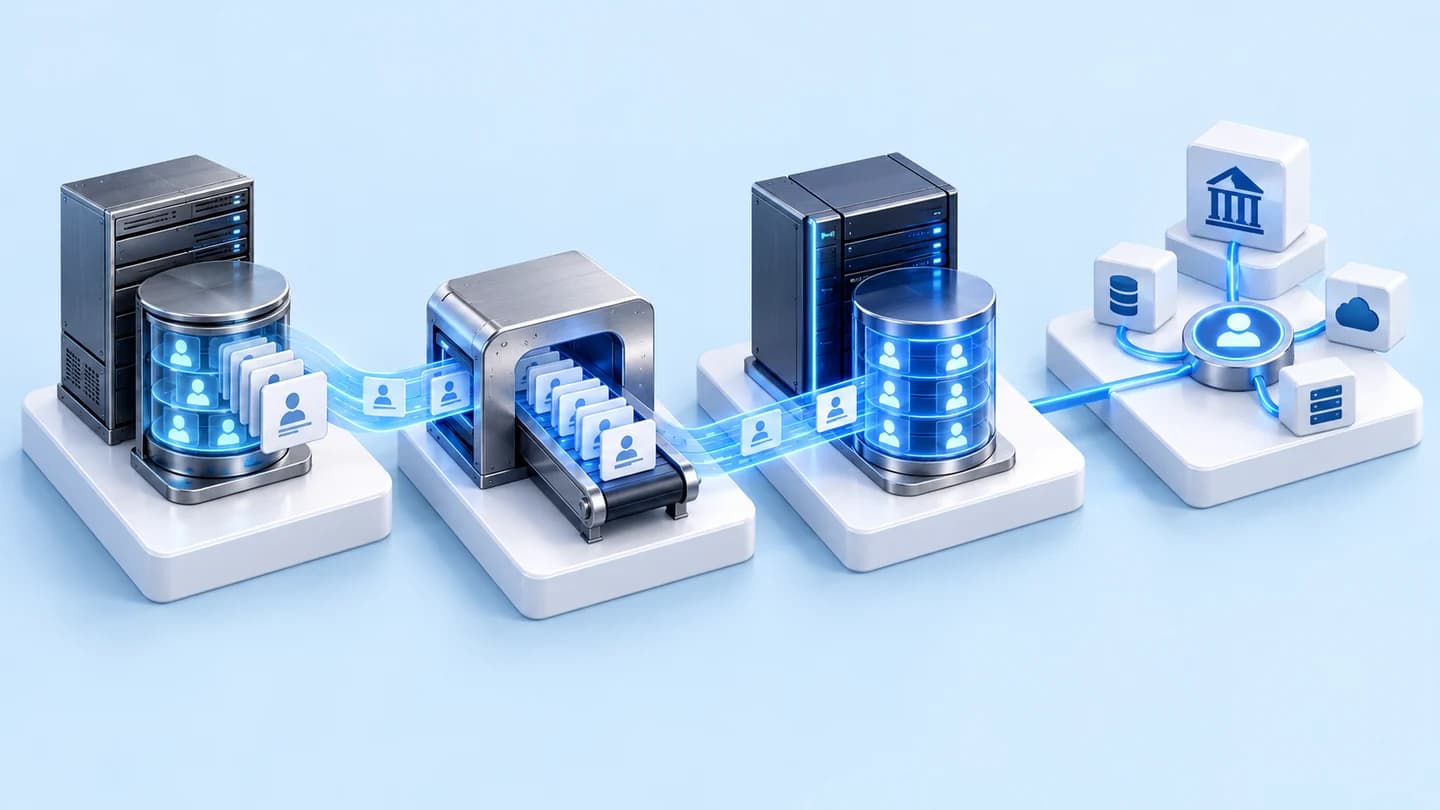
- Transaction data from the transaction exchange systemData cleaned before use
- Train the LSTM modelBack-test and Real-time testing
- Forecast anomalies 5 and 10 minutes aheadOverall / transaction route / by bank
- Grafana DashboardGraphs of actual values against forecast values
- Customer's serversRetrain and data backup/restore
- Industry
- Finance
- Year
- 2021–2023
- Scope of work
- Design, development and installation of a Machine Learning system to forecast financial transaction anomalies on the customer's Production and Development servers, with a model retraining system, a data backup and restore system, automatic archiving of old data, a Grafana Dashboard, system design documents, a project closure document in 2022 and a comparison trial of 3 further models in 2023.
Summary
- AIOP System is a Machine Learning system that forecasts transaction response time anomalies in a large-scale financial transaction system 5 and 10 minutes ahead, overall, by transaction route and by bank.
- The system is installed on the customer's Production and Development servers, separate from the transaction exchange system, with a model retraining system (Retrain), a data backup and restore system, and graphs on a Grafana Dashboard.
- We prepared the project closure document in 2022, and the project then entered the maintenance period under the contract. The system for continued operation when one machine fails (HA) was still undergoing testing at the time of project closure.
- In 2023 we trialled training new models with 3 other algorithms (CNN-LSTM, Random Forest and XGBoost) to compare accuracy at each forecast horizon.
- The system provides forecast values and graphs; decisions on how to respond rest with the system administration team.
The on-site brief
The customer manages application systems and IT equipment across multiple computer centres and wanted to know in advance when transaction volume or transaction response times begin to deviate from normal, rather than finding out once a problem has already occurred. The new system had to work alongside the existing systems without affecting service.
What we did
We developed an AIOP system that uses an LSTM model (a neural network for time-ordered data) to forecast transaction response time anomalies 5 and 10 minutes ahead, and displays actual values against forecast values on a Grafana Dashboard (a screen that displays graphs). The system is installed on the customer's production servers (Production) and development and test servers (Development), separate from the transaction exchange system, with a model retraining system (Retrain) and a data backup and restore system.
Results
We prepared a project closure document (Closing Project) in 2022, summarising the model training results, the Back-test and Real-time forecast results, the data backup system and the system design documents. The project then entered the maintenance period under the contract. In 2023 we trialled training new models with 3 other algorithms to compare accuracy at each forecast horizon.
How the brief came about
The challenge in this case was to know in advance that transactions in a large-scale financial transaction system were about to become abnormal, rather than finding out once a problem had already occurred. The customer is an organisation in Thailand's financial sector that manages application systems and IT equipment across multiple computer centres. The customer wanted a Machine Learning system that would analyse, predict and alert when transaction volume or transaction response times begin to deviate from normal.
A large-scale financial transaction system has to run continuously. When response times begin to slow, the impact reaches many users at the same time. Advance forecast values give the system administration team time to check which transaction route or bank an anomaly started at, before deciding how to respond.
What is AIOps?
AIOps is the use of AI and Machine Learning to help IT teams monitor systems, for example by detecting abnormal patterns in system operating data and alerting the team before users are affected. In this case, the system is named AIOP System.
Requirements and constraints
The system had to forecast from the customer's real transaction data and had to avoid affecting the service of the existing system. The main requirements and constraints were as follows.
- The new system had to work alongside the existing systems without affecting service. The customer set this requirement from the start of the project.
- The ML system runs on the customer's servers, both production servers (Production) and development and test servers (Development).
- Transaction data had to be converted and cleaned before being used to train the model. In the early phase, obtaining complete data and gaining access to it took a great deal of time.
- The project's requirements documents are confidential to the customer.
Why we chose an LSTM model and installed it separately from the transaction exchange system
We chose LSTM because it is a neural network suited to time-ordered data, and transaction response times are data of this kind. We installed the ML system on servers separate from the transaction exchange system because the customer specified that the new system must not affect service. The ML system therefore receives transaction data from the existing system for analysis.
- 1
Collect and clean the data
We take transaction data from the customer's transaction exchange system, convert its format, check its continuity and remove unusable data before passing it on to model training.
- 2
Train the LSTM model
The model learns the patterns of transaction response times, and the system then saves the model files and training reports on the server.
- 3
Forecast 5 and 10 minutes ahead
The model forecasts overall, by transaction route and by bank. We tested the forecast results both retrospectively against historical data (Back-test) and in real time (Real-time).
- 4
Display on a dashboard
Graphs on the Grafana Dashboard compare actual values with forecast values and statistics, so the system administration team can monitor them from a single screen.
- 5
Keep the system ready for use
The model retraining system (Retrain) is used to update the model when new data becomes available. The data backup and restore system, together with automatic archiving of old data, helps prevent server storage from filling up.
What was installed and summarised in the project closure document
The work installed on the customer's Production and Development servers and summarised in the project closure document is as follows.
- Trained LSTM model with a training report
- A system for forecasting transaction response time anomalies 5 and 10 minutes ahead, with both Back-test and Real-time testing
- Grafana Dashboard showing graphs of actual values against forecast values and statistics
- Model retraining system (Retrain)
- Data backup and restore system (Backup & Restore) and automatic archiving of old data
- System design documents and the project closure document
Status of the HA system
The system is also designed to keep running when one machine fails (High Availability, or HA), but at the time of project closure HA was still undergoing testing on the customer's machines, so we do not count HA as completed work.
Project stages
The project ran from 2021 to 2023 as follows.
- 2021: Project start; collection and conversion of transaction data for model training
- 2022: Project closure document prepared, followed by entry into the maintenance period under the contract
- 2023: Trial training of new models with CNN-LSTM, Random Forest and XGBoost to compare accuracy at each forecast horizon
Confirmed results from the project closure document
We developed a Machine Learning system that forecasts transaction response time anomalies 5 and 10 minutes ahead for an organisation in Thailand's financial sector, and prepared the project closure document in 2022. This document summarises the model training results, the Back-test and Real-time forecast results, the data backup system and the system design documents. This case has no measured figures that can be published, so we report only what is confirmed by documents.
In 2023 we trialled training new models with 3 other algorithms, namely CNN-LSTM, Random Forest and XGBoost, to compare accuracy at each forecast horizon. The recommendations from the trial were to train the models further for higher accuracy and to consider using server hardware data as an additional input.
What we learned
This project offers 3 principles for forecasting anomalies in IT systems.
- Data readiness determines the schedule more than model selection does. In this project, obtaining complete transaction data and converting it into a usable form was the main work of the early phase, so data access rights should be agreed and samples of real data checked before delivery dates are set.
- Where a system must not affect service, the forecasting component should be kept separate on its own server and receive data from the main system for analysis. A separate server means models can be retrained without touching the main system.
- A forecasting model needs a post-installation maintenance plan. Forecast results must be checked both retrospectively and in real time, and a model retraining system must be in place from the start. Any part whose testing is not finished, such as HA, must have its status clearly stated in the project closure document.
How to apply this approach to your system
If your organisation has time-ordered system operating data and wants early warning signals, you can use the same approach as this case: keep the forecasting system separate on your own server, train the model on real data, and display actual values against forecast values on a dashboard. What needs adapting is the input data, the forecast horizon and the measurement method.
Reusable parts and parts that need adapting
| System part | Reusable | Needs adapting when |
|---|---|---|
| Input data | Transaction response time data ordered by time | If your system stores data in a different format or your historical data is not continuous, the data must be checked and converted first. |
| Model | LSTM for time-series data, and comparison with other algorithms | If the data or forecast horizon differs from this case, the models must be trained and compared again. |
| Forecast horizon | 5 and 10 minutes ahead | If your team needs a different amount of time to prepare a response, the horizon and measurement method must be agreed afresh. |
| Visualisation | Grafana Dashboard comparing actual values with forecast values | If your team already uses other monitoring tools, you will need to agree where the forecast values are displayed. |
| Installation and maintenance | Customer's servers, Retrain system and data backup system | If you do not yet have a separate server, or you need HA, additional planning and testing are required. |
- Have access rights to transaction data and historical data ready from the start, and check the data for completeness and continuity.
- Agree together how accuracy will be measured, both retrospectively and in real time, and how far ahead to forecast.
- Define the scope of post-installation maintenance clearly, for example the cycle for checking forecast results and the cycle for retraining models.
- Consider adding server hardware data as a model input, as recommended by the trial in 2023.
Read more
- Predictive Analytics: analysis and forecasting from real data
- Data integration and AI development services for organisations
- System care and maintenance service
- Case: production data centralisation with a DTS system
- Article: How AI trend forecasting helps factories plan
- Article: Buy an AI Server or rent cloud GPUs: which offers better value?
Technology used
Frequently Asked Questions
What does this system forecast, and how many minutes ahead?
A system that forecasts anomalies in transaction response time 5 and 10 minutes ahead, as an overall view, by transaction routing path and by individual bank. The system provides forecast values and graphs, while decisions on how to respond rest with the system administration team.
Does the existing system need to be modified?
In this case, the ML system is installed on the customer's Production and Development servers, separate from the transaction processing system, and receives transaction data from that system for analysis. Not affecting the service was a customer requirement from the outset. For your system, we need to look at the actual system before we can say which parts need adjusting.
What kind of AI model is used?
The system in this case uses an LSTM model, which is well suited to time-ordered data. In 2023 we trialled retraining the model with 3 other algorithms (CNN-LSTM, Random Forest and XGBoost) to compare accuracy at each forecast horizon.
How is the system maintained after installation?
After the project closure documents were prepared in 2022, the project entered its contractual maintenance period. In 2023 we trialled retraining the model, and recommended further model training for higher accuracy, as well as considering server hardware data as an additional input.
If we want a system like this, how much does it cost?
There is no standard price. We assess it based on the type and volume of data, the forecast horizon you need and the condition of the servers where it will be installed. Contact us to request a quotation.