




What is Vision Counting? How does AI count products using cameras?
Inspektion engineering team · Published 7 September 2026 · Last updated 14 October 2026
Rewritten from the original article, first published May 2025
Vision Counting uses cameras and AI to count workpieces instead of human eyes or old sensors, reducing counting errors and providing immediate reports for factory managers to make faster decisions
Summary
- Vision Counting uses a camera to capture images of workpieces and has AI count them in place of people or conventional counting sensors.
- It suits workpieces with varied shapes or irregular placement, where conventional counting sensors do not work accurately.
- Choose image processing or an object detection model according to the characteristics of the workpiece, and test speed and accuracy before use.
- Inspektion has developed real systems of this kind on several projects, including counting workpieces at the line and counting dark spots on white powder in trays.
What is Vision Counting?
What is Vision Counting?
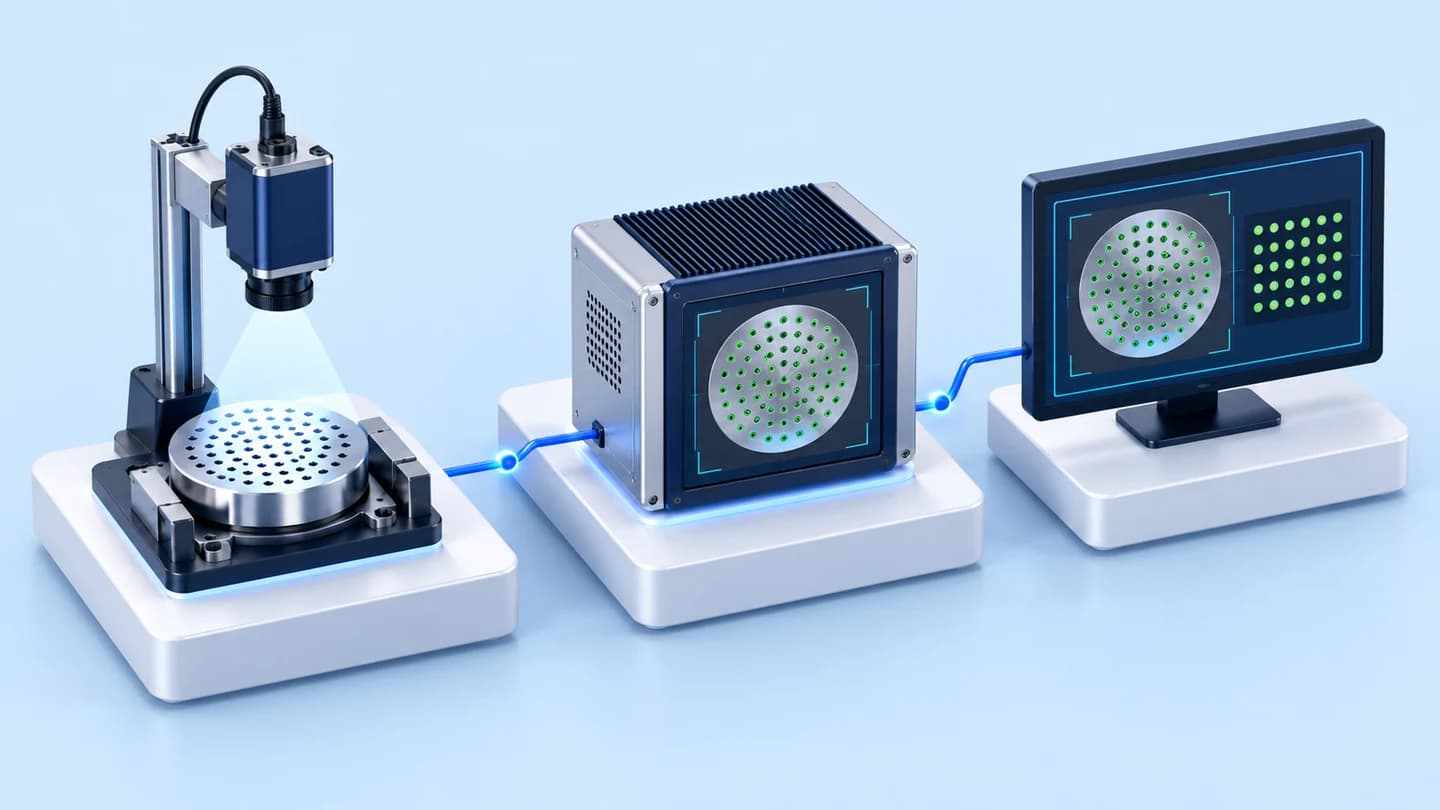
Vision Counting uses a camera to capture images of workpieces on a production line, then has image processing software or AI analyse them to count the workpieces automatically, in place of counting by eye or with conventional counting sensors (such as through-beam light sensors).
Why factories should pay attention
Counting products is an important step that affects stock management, production capacity planning and reporting to management. The weakness of conventional methods (counting by people or with through-beam light sensors) is that errors occur easily when workpieces overlap, have varied shapes or travel on a fast conveyor. Vision Counting solves this problem by having AI "see" and distinguish each workpiece from real images.
How AI counts workpieces
- YOLO (You Only Look Once) — divides the image into a grid and detects the positions of all objects in a single image in real time [1]
- Faster R-CNN — proposes object location boxes with higher accuracy, suited to work that needs fine detail more than speed [2]
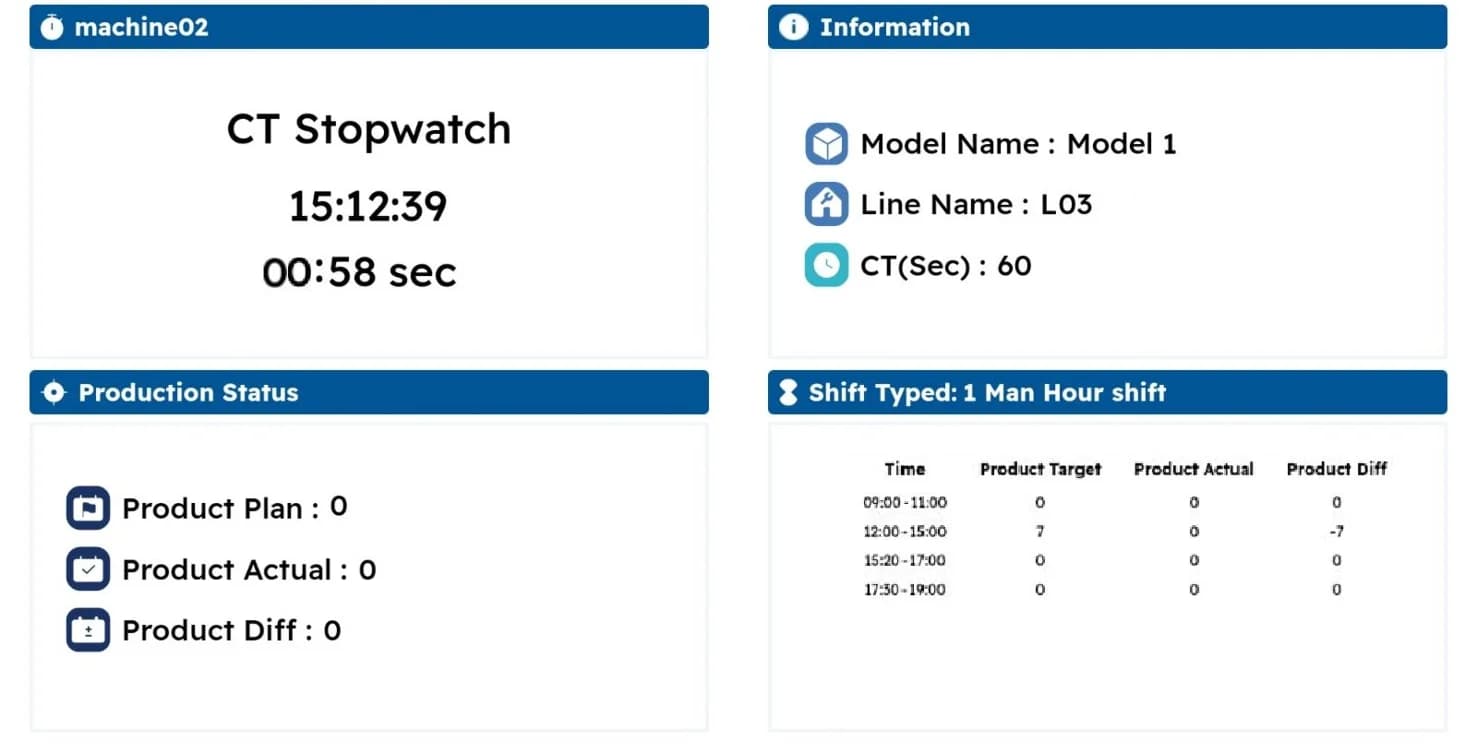
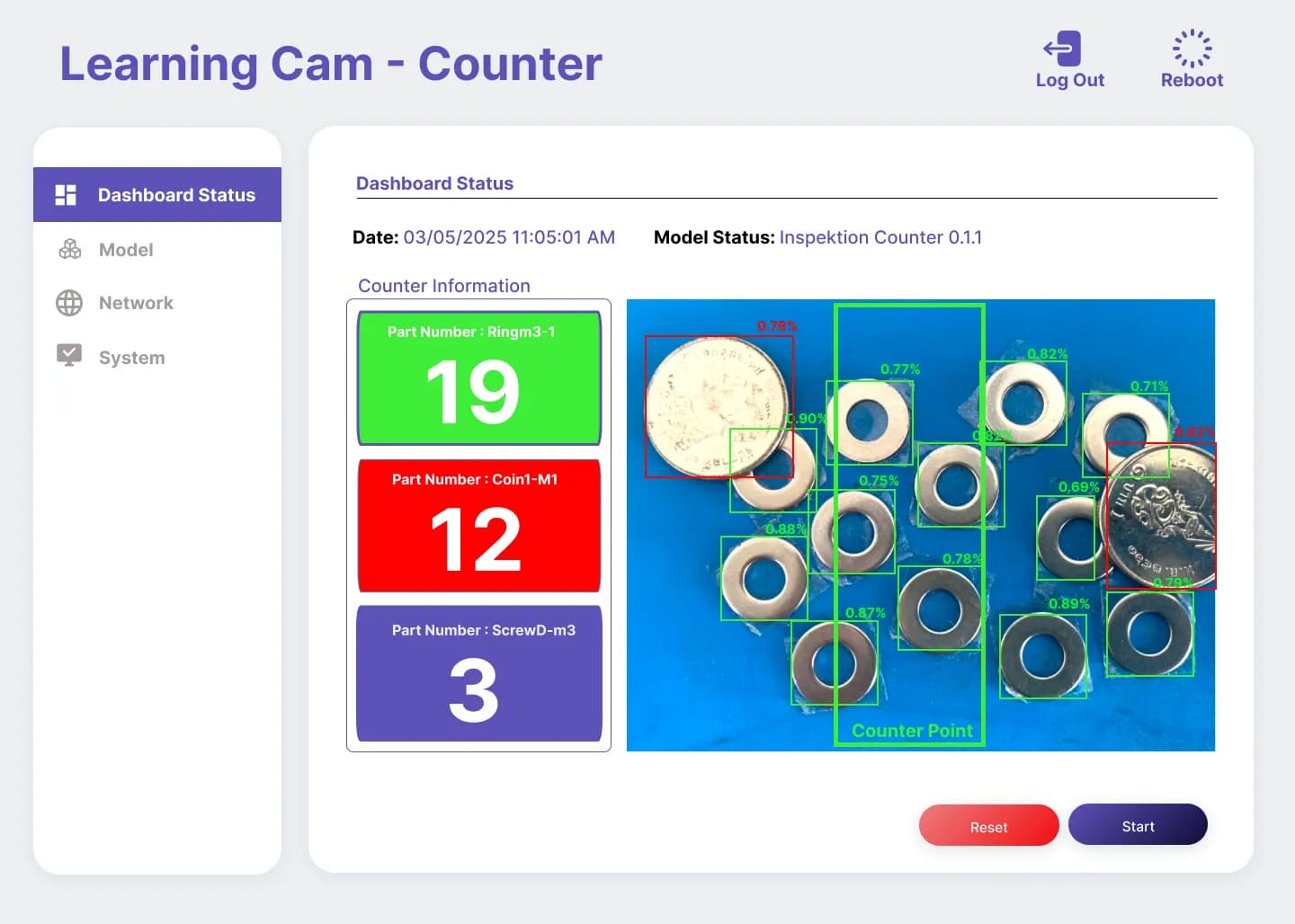
- After detecting the objects, the system counts how many move past a reference line in the image, or totals the number in the frame, then sends the result to a dashboard or monitoring platform.
Examples of our real work
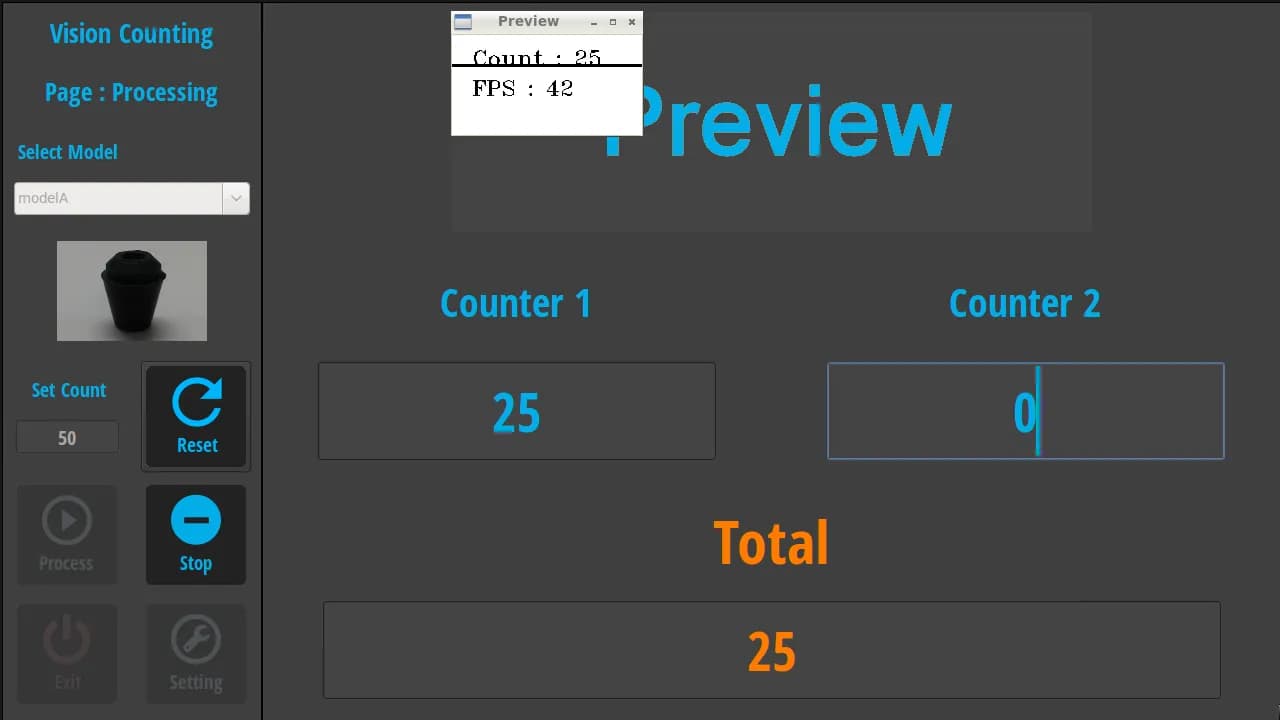
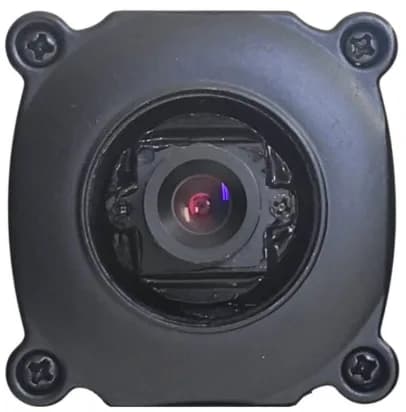
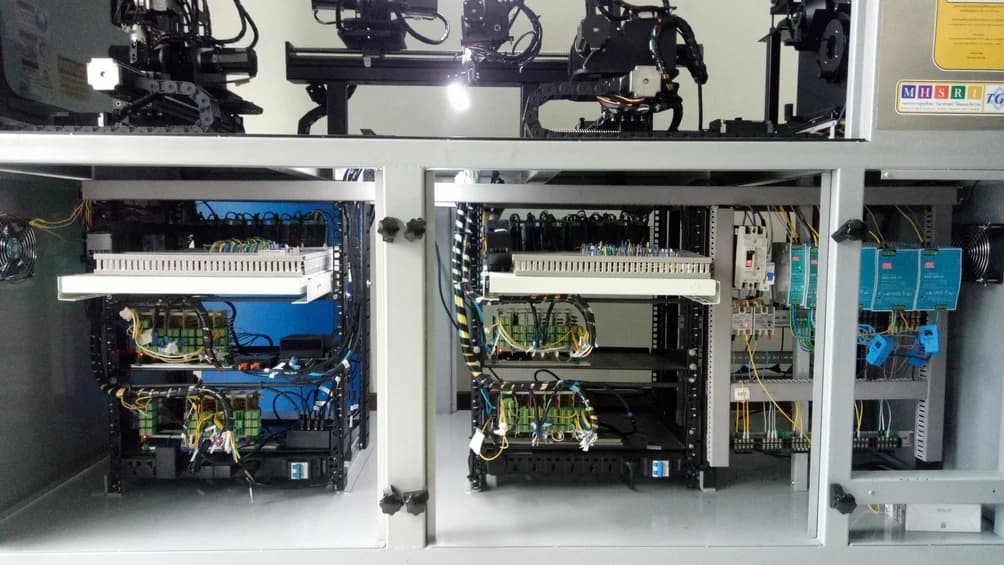
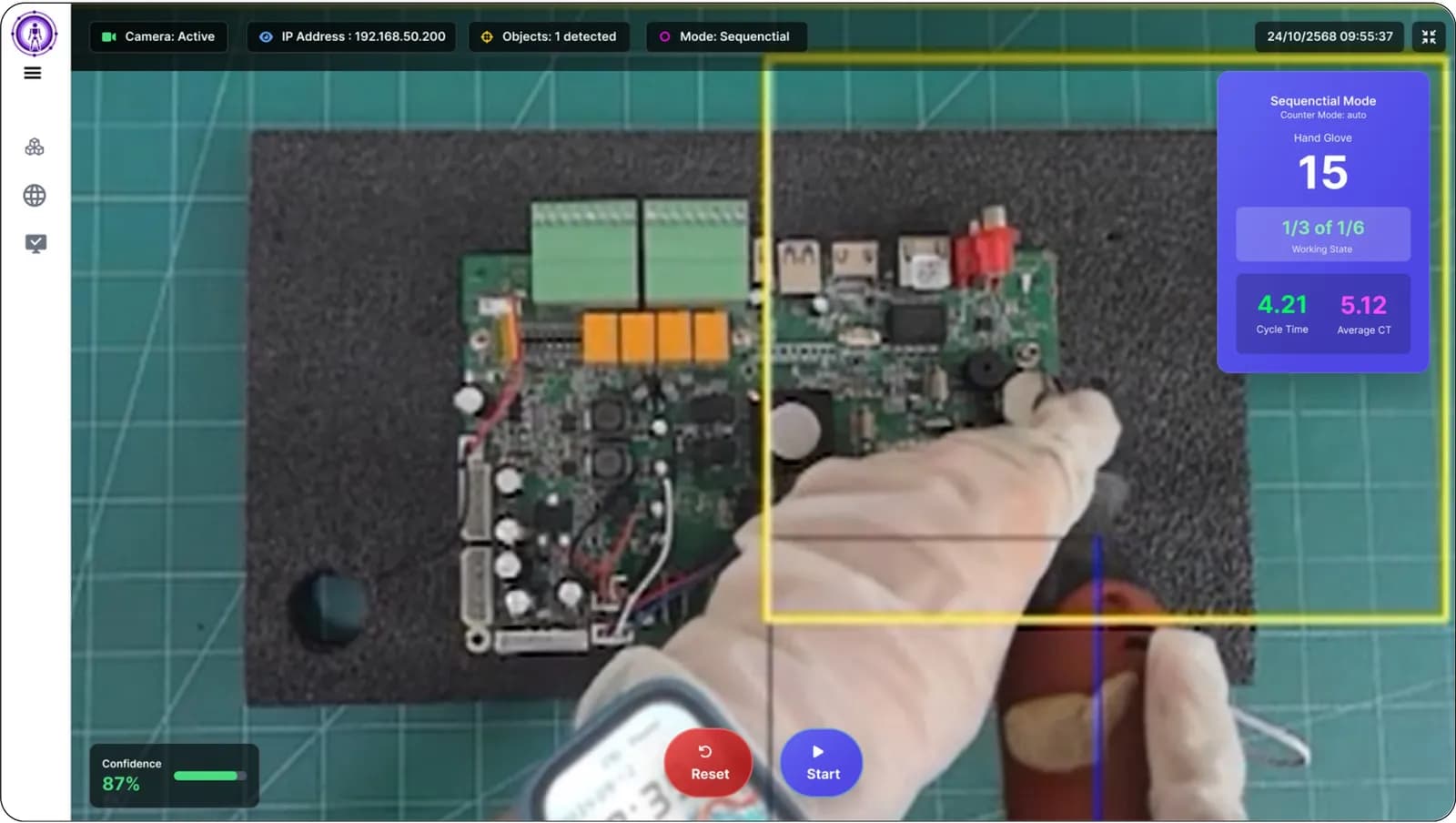
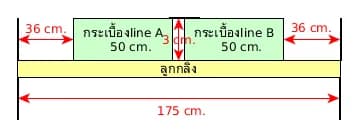
We have designed and installed a camera-based workpiece counting system (Machine Vision Counter) with dedicated lighting for general manufacturing plants, and developed an image-based system for counting dark spots on white powder — see the details in Workpiece counting system with Machine Vision Counter and Image-based system for counting dark spots on white powder. In addition, the Task Cam camera in Sequential mode can also count completed workpieces while checking the work sequence.
Frequently Asked Questions
How much more accurate is Vision Counting than conventional counting sensors?
It depends on the characteristics of the workpieces and the conditions at each site — workpieces with varied shapes or irregular placement often achieve clearly better results than with conventional sensors. Our team assesses suitability after surveying the actual site.
Do we need to change the conveyor or the production line structure?
In most cases, cameras can be added to the existing line without structural changes, except in some cases where dedicated lighting has to be added.
Can it be used with workpieces that move very fast?
It has to be tested with the actual speed, workpiece spacing, lighting, camera and processing before the supported range can be defined.
References
- [1]
You Only Look Once: Unified, Real-Time Object Detection — arXiv (Redmon et al., 2016)
- [2]
Faster R-CNN: Towards Real-Time Object Detection with Region Proposal Networks — arXiv (Ren et al., 2015)
- [3]
OpenCV Documentation — OpenCV.org
Related work