




Prototype electrical appliance waste (E-Waste) registration and tracking system for a Thai government agency
Organisation: Electrical and Electronics Institute (EEI)
Smart Electronics is a web-based prototype we developed for the Electrical and Electronics Institute to register products and electrical appliance waste, confirm waste transfers using QR codes and report dismantling results. The system has 8 modules, supports 6 stakeholder groups and was delivered with user training in 2021.
- Industry
- Government
- Year
- 2021
- Scope of work
- Design, development, installation on a cloud server and testing of a prototype system with 8 modules for 6 stakeholder groups, together with a final report, a user manual, on-site training for user representatives and 2 online training cohorts.
Summary
- The Smart Electronics system is a web-based prototype system we developed for the Electrical and Electronics Institute to track electrical appliance waste from manufacturer to dismantling plant, supporting 6 stakeholder groups in one system.
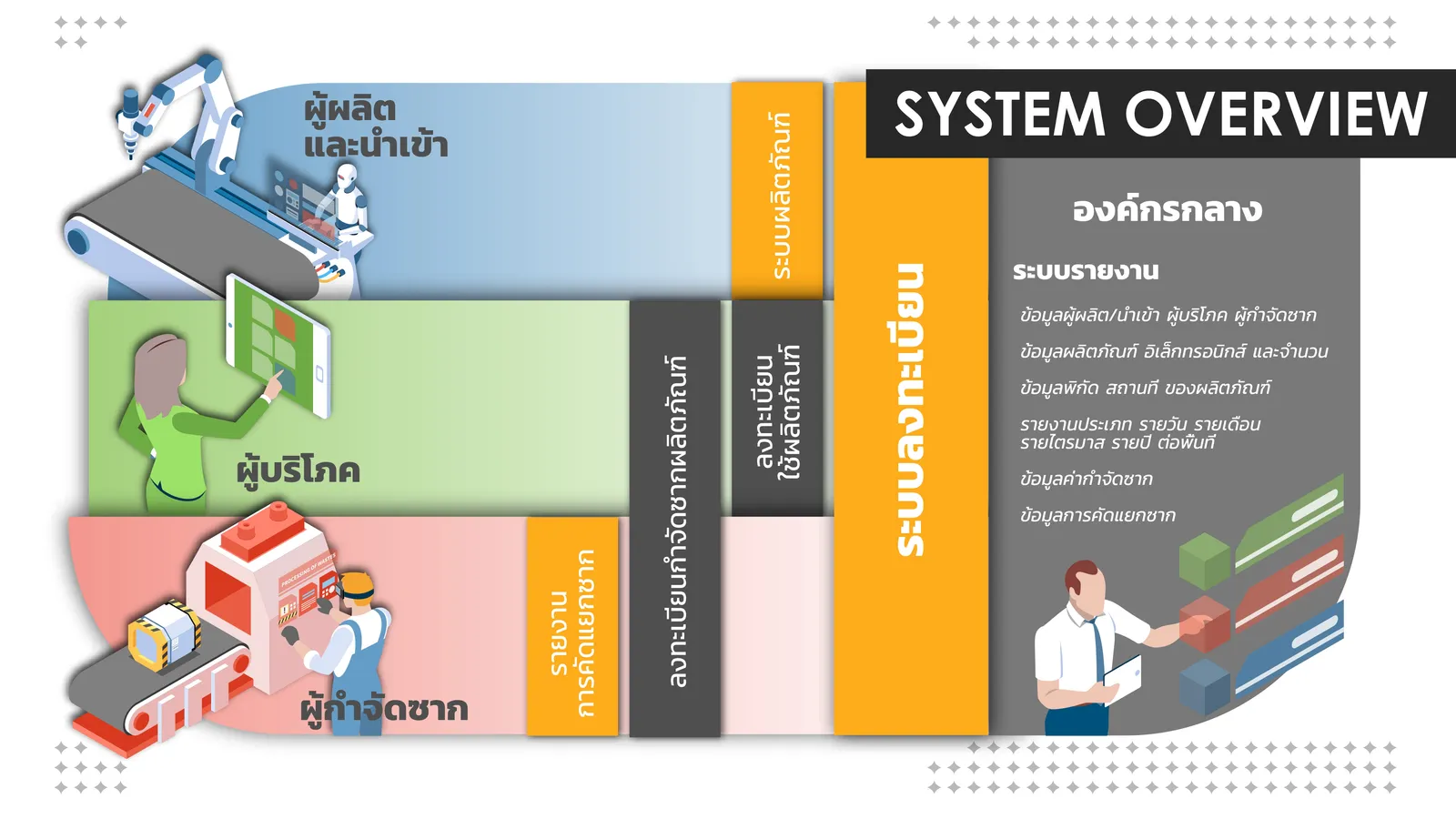
- The system has 8 modules, from user registration, product and waste registration and QR Code confirmation of waste handovers through to dismantling reports and the central organisation's dashboard.
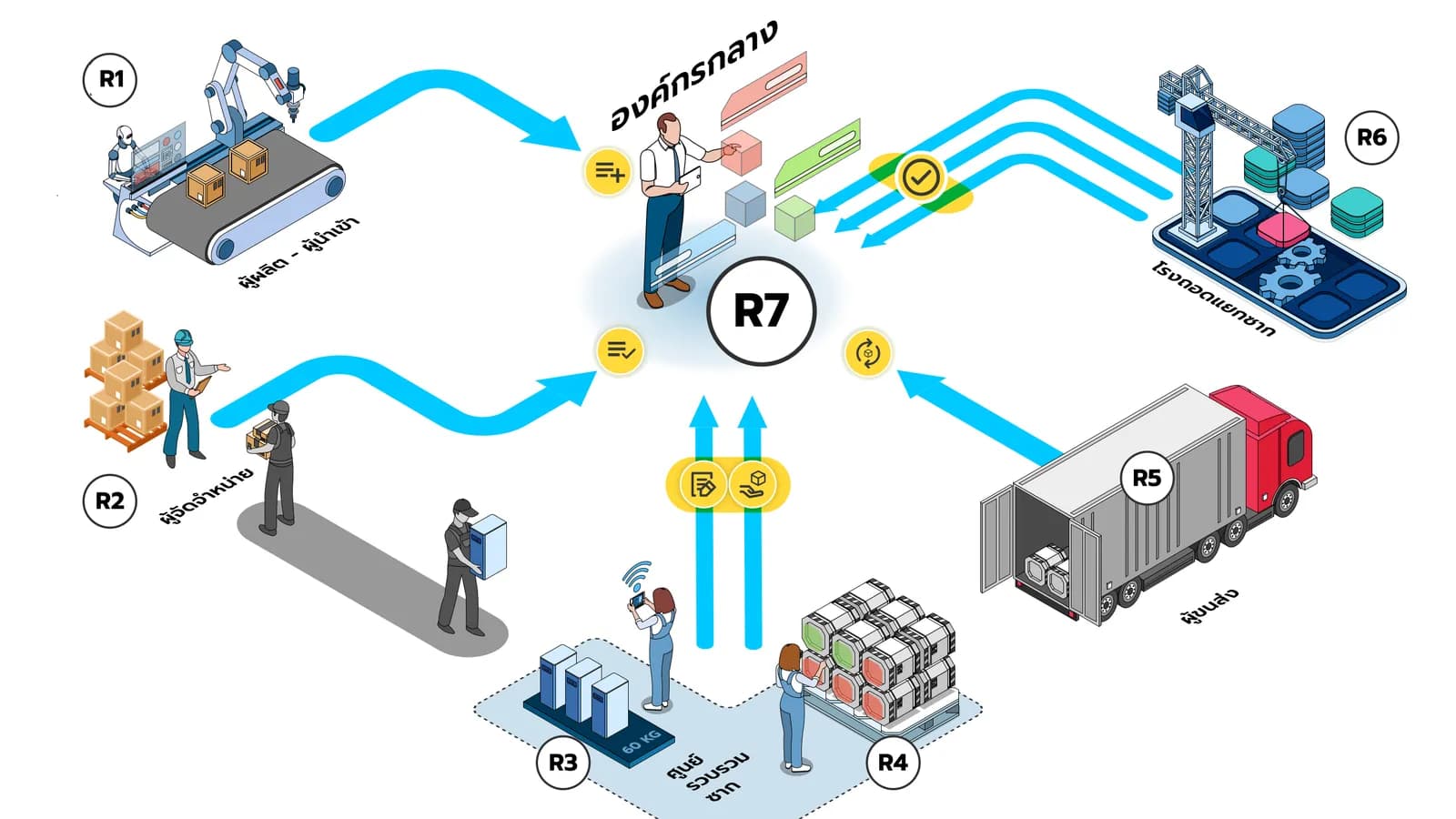
- The system supports draft guidelines proposing a central organisation (Clearing House) to manage the system and data, during the period when the Act on the management of waste electrical appliances was still a draft.
- We delivered the system on a cloud server and submitted the final report in 2021, and trained user representatives on site and in 2 further online cohorts. The work passed acceptance, and the Institute issued us a letter of reference for the work.
The on-site brief
In 2021, the existing system for managing waste electrical and electronic equipment (E-Waste) did not yet cover the recall of waste or tracking where each item went. The Institute therefore wanted a prototype system into which all parties concerned could submit data in one place, in line with draft guidelines proposing a central organisation (Clearing House) to manage the system and data.
What we did
We developed a web application with 8 modules on a cloud server. The 6 stakeholder groups use the same system but see only their own work. The system accepts product and waste registration, confirms waste handovers by scanning a QR Code, receives dismantling reports and lets the central organisation track the overall picture from a dashboard.
- Product registrationManufacturer / importer
- Waste registration and inventory managementWaste collection centre
- Waste handover, confirmed by QR CodeCarrier
- Waste inspection and receipt, dismantling reportDismantling plant
- Review and result trackingCentral organisation
Results
We delivered the system on a cloud server and submitted the final report in November 2021, and trained user representatives on site and in 2 further online cohorts. The work passed acceptance, and the Institute issued us a letter of reference for the work.
How the brief came about
The challenge in this case was to track waste electrical and electronic equipment (E-Waste) along its entire route, from manufacturer to dismantling plant. Domestic E-Waste was growing every year, but the existing management systems did not yet cover the recall of waste or tracking where each item went. If each party kept its data separately, the regulating agency would struggle to say where each item came from, where it went and whether it had been dismantled.
In 2021, when the project took place, the Act on the management of waste electrical appliances was still a draft. The agencies concerned jointly agreed on draft guidelines proposing a central organisation (Clearing House, a central body that manages the system and data). The Electrical and Electronics Institute therefore wanted a prototype system supporting these guidelines. According to the project's goals, the data the system gathers can be used to inform policy or measures.
What is a WEEE Manifest?
WEEE (Waste Electrical and Electronic Equipment) means discarded electrical and electronic equipment, while a Manifest is a record of the waste's route from origin to destination. The system in this case works like a digital route record, with every party submitting data to the same place. In the project documents, it is named the Smart Electronics system for e-waste management.
Requirements and constraints
The system had to be usable by every party along the waste's route and had to support guidelines that were still in draft. The main requirements and constraints were as follows.
- Support 6 stakeholder groups: manufacturers or importers, distributors, waste collection centres, carriers, dismantling plants and the central organisation
- All user groups log in to the same system but see only their own work, while the central organisation logs in through the system administrator page
- Register many product types, such as air conditioners, refrigerators, televisions, computers and telephones
- Record every waste handover, from collection centre and carrier through to dismantling plant
- A prototype system that supports the draft guidelines while the Act was still a draft
- Delivered on a cloud server and tested against test items based on user needs (User Requirement)
How does the system track waste from manufacturer to dismantling plant?
The system tracks waste by having every party record data in one system and having the receiving party scan a QR Code each time waste is handed on, from the collection centre through to the dismantling plant. The collection centre displays a QR Code for the carrier to scan when collecting the waste, and the carrier displays a QR Code for the dismantling plant to scan when delivering it. The collection centre can therefore track the status of each delivery order from the system.
Confirmation at each handover point tells the system which party holds each waste item. Users confirm handovers on site by scanning a QR Code, while permissions separated by user group allow every party to use the same system. The steps in the system are as follows.
- 1
User registration
Manufacturers, importers, distributors, waste collection centres, carriers and dismantling plants register in the system according to their type.
- 2
Product registration
Manufacturers or importers record product data, while distributors update product status.
- 3
Waste registration and inventory management
The waste collection centre records incoming waste, checks its condition, stores it in inventory and creates delivery orders to the dismantling plant.
- 4
Waste handover by QR Code
The carrier scans the collection centre's QR Code when collecting the waste, and the dismantling plant scans the carrier's QR Code when receiving it.
- 5
Inspection, receipt and dismantling reports
The dismantling plant inspects and receives the waste, checks its condition, then reports the dismantling results back into the system.
- 6
Review and result tracking
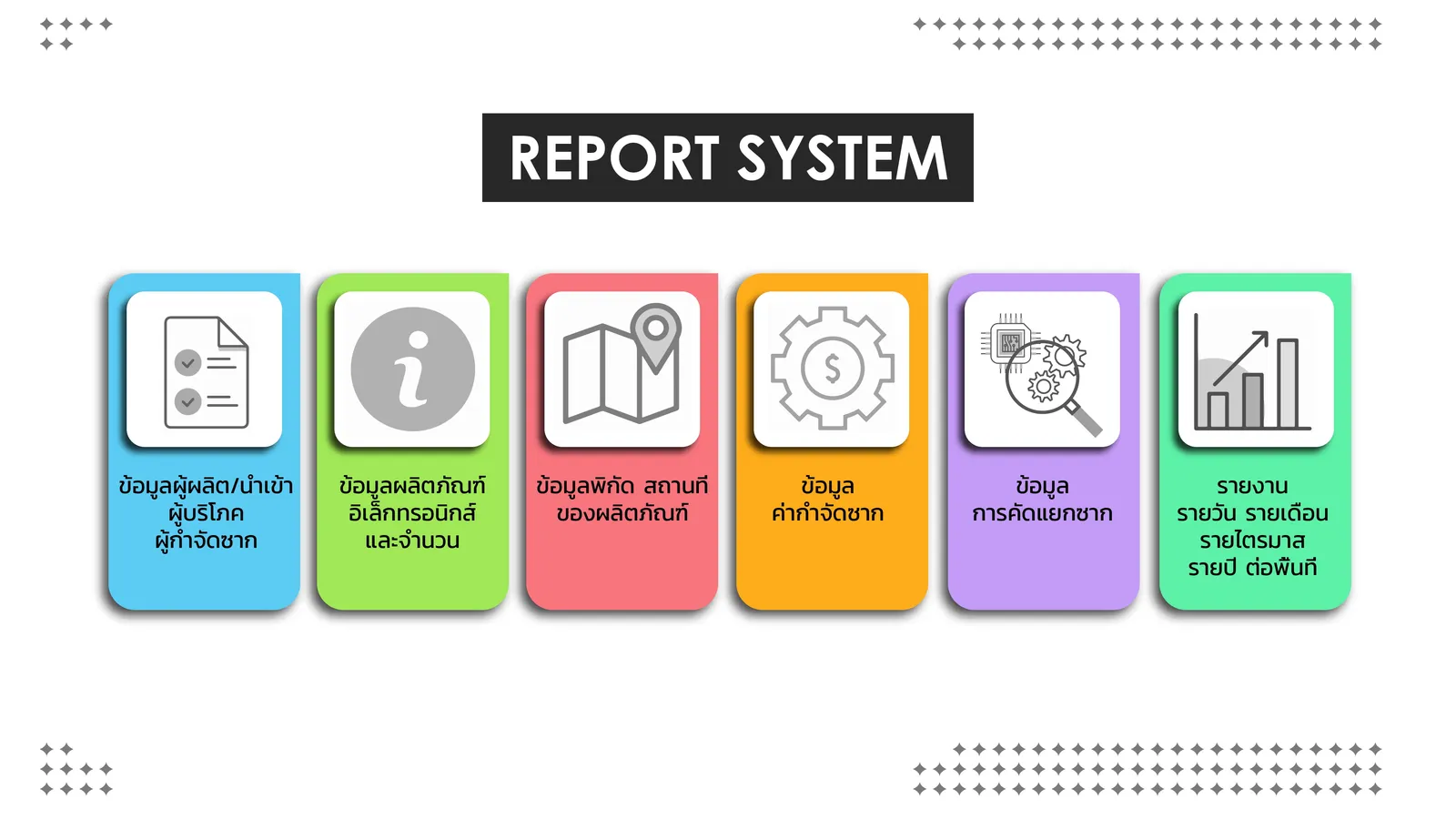
The central organisation views the overall picture, new products, waste products, service life and dismantling results from the dashboard.
The system design document defines the structure as follows. There is a Firewall (a checkpoint that filters data entering and leaving the network), the front-end and back-end machines are separated, and a Load Balancer (which distributes work across several machines to reduce system downtime) is specified. Data from each step is designed to reach the central database through an API Gateway (a central channel that passes data between user screens and the database), and there is data storage and a database for which data backup has been planned.
Deliverables
We delivered a prototype system with 8 modules on a cloud server, together with a final report, a user manual and training for user representatives. The system's modules cover the following main tasks.
- User registration by stakeholder type
- Product registration by manufacturers or importers, and product status updates by distributors
- Waste registration and waste inventory management at collection centres
- Transport management by scanning QR Codes
- Waste inspection and receipt, and dismantling reports, at dismantling plants
- Review and result-tracking dashboard for the central organisation
How did we test the system and train users?
We tested the system against test items based on user needs (User Requirement), then worked with the Institute to train user representatives both on site and online. On-site training was held for Saensuk Town Municipality in Chonburi Province and for users from the private sector, and online training ran for 2 further cohorts.
Prepare for both on-site and online training
In this case, on-site installation and training had to be postponed according to the situation. Preparing both on-site and online training made it possible to continue training user representatives even when the site could not be accessed as scheduled.
Confirmed results
This work passed acceptance, and the Electrical and Electronics Institute issued us a letter of reference for the work. We delivered the system on a cloud server and submitted the final report in November 2021. User representatives were trained on site and in 2 further online cohorts.
This case has no post-deployment measurement figures, such as the number of waste items tracked, so we report only results backed by documents: delivery, training, acceptance and the letter of reference.
What we learned
This work offers the following principles for systems that track items handed on through several stages.
- Define each user group's role before designing the screens. When several user groups share one system, the system must know what each group records and what it sees. In this work, 6 user groups used the same system. All groups except the central organisation entered from the same page and saw only their own work, while the central organisation entered through the system administrator page.
- Reliable tracking must record every handover point and have the receiving party confirm. In this work, each stage of the waste handover from collection centre to dismantling plant was confirmed by scanning a QR Code, so the collection centre could see the status of each delivery order.
- When the rules are still in draft, base the prototype system on guidelines the stakeholders have jointly agreed, and define test items from user needs. The acceptance criteria are then clear even while the law is still a draft.
How can you apply this approach to your tracking work?
If your work needs to track goods or waste handed on through several stages, you can use the same approach as this case: have every party record in one system, separate permissions by role and confirm handovers by scanning a QR Code. What needs adjusting is the data to be recorded and each party's steps, when the rules or parties in your work differ from this case.
Reusable parts and parts that need adapting
| System part | Reusable | Needs adapting when |
|---|---|---|
| Users and permissions | Users enter from the same page and see only their own work, while the party overseeing the overall picture enters through the system administrator page | The user groups in your work differ from this case, so roles and permissions must be redefined |
| Registration | Register products and waste by type | The items tracked are not electrical appliances, so the data to be recorded must be redefined |
| Handover | Confirm handovers by scanning a QR Code | The handover points or transport sequence differ from this case, so the scanning steps must be redesigned |
| Reporting from the destination | The destination reports results back into the system | The destination is not a dismantling plant, so the report format must be redefined |
| Overall tracking | Dashboard for the central organisation | Your organisation needs to view overall data differently from this case |
- Agree clearly on the workflow and the data each user group must record before designing the screens
- Have real user representatives from each group ready to join testing and receive training
- Define test items and acceptance criteria together from the start of the project
- Plan who will look after the server, security and data backup after handover
Images of the system and how it works
Technology used
Frequently Asked Questions
Which user groups does this system support?
It supports 6 stakeholder groups: manufacturers or importers, distributors, e-waste collection centres, transporters, dismantling plants and the central organisation. The first five groups log in from the same page and see only their own work, while the central organisation logs in through the administrator page.
How is the transport of e-waste tracked?
QR Codes are used to confirm each handover of e-waste. The collection centre displays a QR Code for the transporter to scan when collecting the e-waste, and the transporter displays a QR Code for the dismantling plant to scan when delivering it. The collection centre can therefore track the status of each delivery order in the system.
Do we have to wait for the law to be enacted before starting to build the system?
In this case we did not wait. The prototype system was developed according to the guidelines (draft) jointly endorsed by the agencies concerned, while the e-waste management Act was still a draft. If your work is in a similar situation, you should clearly agree on the guidelines to be used as a reference before starting the design.
What did this project deliver?
We delivered the system installed on a cloud server, the final report, the user manual, and training for user representatives both on site and online. The work passed acceptance, and the Electrical and Electronics Institute issued us a letter confirming our work.
Can this concept be applied to tracking other types of waste or goods?
The same approach can be used if the items pass through several handovers and each handover point can scan a QR Code. However, the users, the data to be recorded and the workflow steps would need to be defined afresh for your work. We need to discuss the details of your process before we can assess it. Pricing is by quotation request.