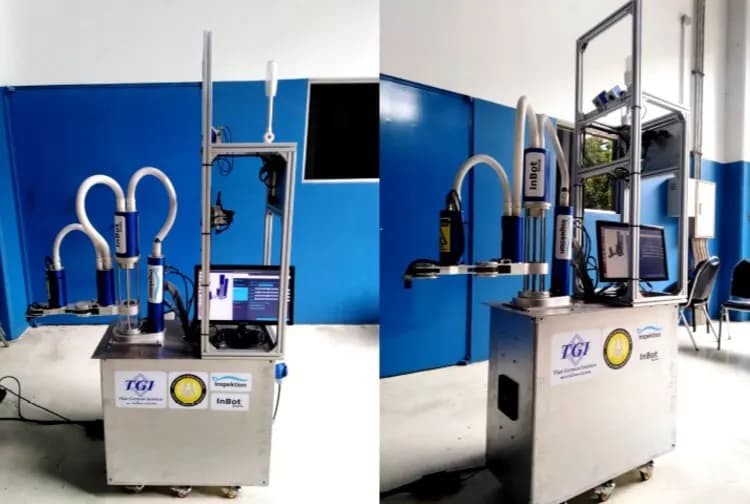
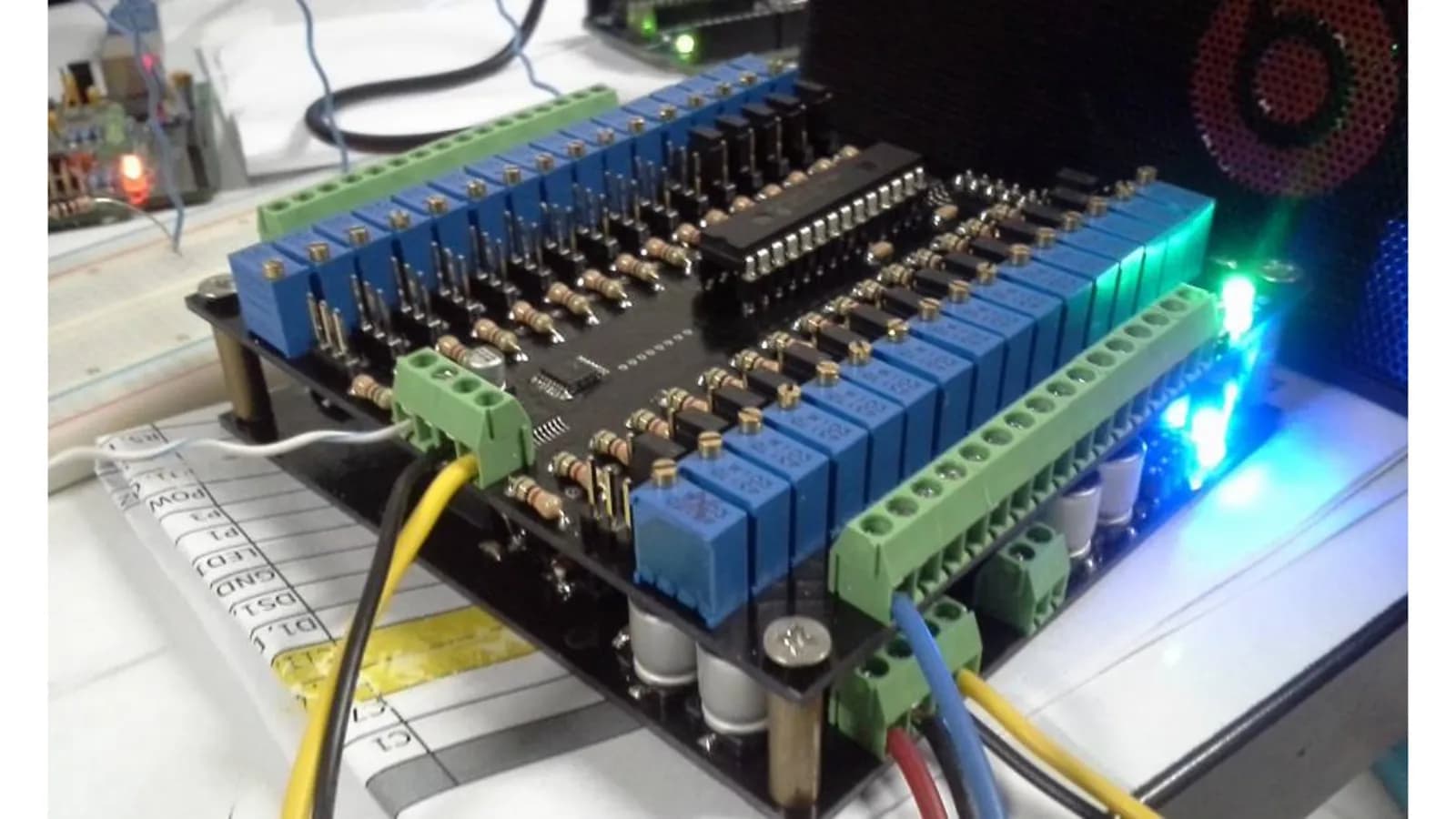
Prototype SCARA pick-and-place arm with a controller designed for AI learning, under a Thai government-funded project in 2018
Organisation: Office of the Permanent Secretary, Ministry of Science and Technology, together with the Thai-German Institute (TGI)
This 4-axis SCARA prototype picks and places parts at positions set through a software interface, with a 3D simulation before operating the real machine. We designed and built 1 arm and a control cabinet using an NVIDIA TX1 processing board under the 2018 technology product development program for import substitution. The project manual specifies AI-based grasp learning. The machine underwent the project's assessment on 15 March 2019.
- Industry
- Government
- Year
- 2018–2019
- Scope of work
- Design, build and test 1 robot arm prototype set with controller; test the robot arm program with a steel stamping press at a metal stamping factory; prepare progress reports, a final report, and an operation and maintenance manual; and transfer technology to the private company participating in the project
- Duration
- 8 months under the contract (30 March – 30 November 2018)
Summary
- We designed and built a 4-axis SCARA robot arm prototype (1 set), with a control cabinet using an NVIDIA TX1 board, under the 2018 technology product development program for import substitution
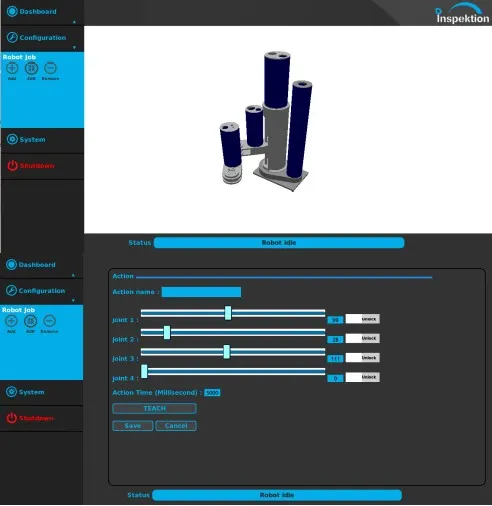
- Users define pick-and-place positions from a software screen and simulate the operation with a 3D model (Simulation) before running the real machine
- Learning to pick with AI, control over a LAN and history storage on a Cloud Server are features specified in the project handbook, not test results
- The project's assessment form dated 15 March 2019 records that the machine was fully assembled, could be tested according to the specified functions and had a safety protection system, with recommendations on the earth wire and signal lights
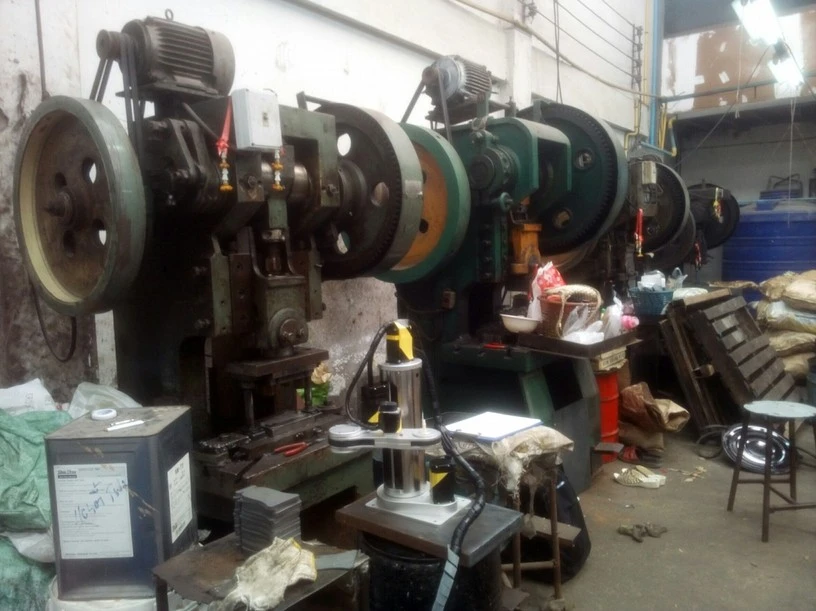
- We tested the prototype robot arm's program with a steel stamping press at a metal stamping factory. Use for picking workpieces on a production line requires further testing with real workpieces
The on-site brief
The project's target group had a problem of reliance on manual labour, so the project needed a prototype robot arm for picking that technicians, electricians or staff with basic computer skills could set up themselves, without a specialist. The machine price and maintenance costs had to be at a level within reach of SMEs (small and medium-sized enterprises).
What we did
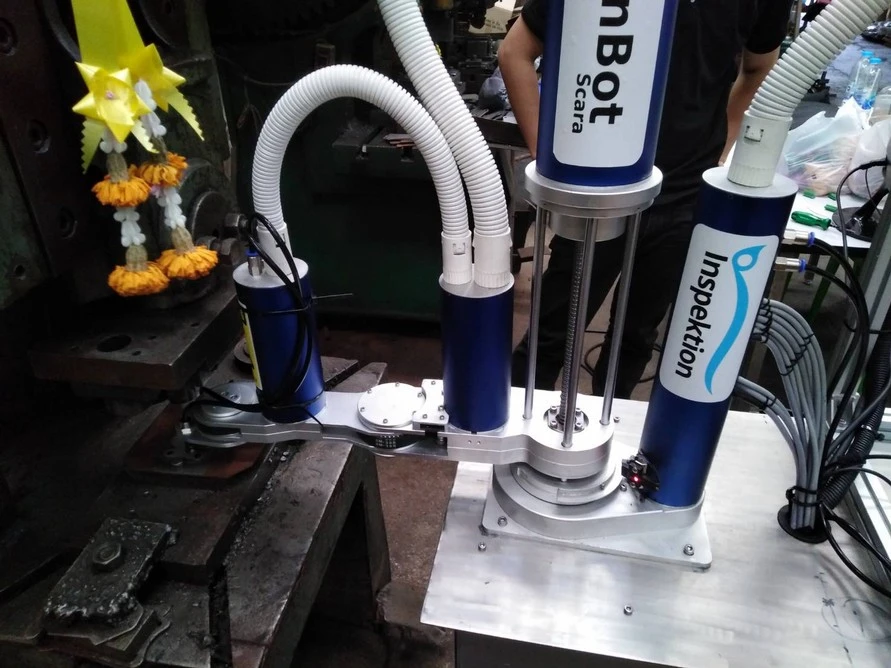
We designed and built a 4-axis SCARA robot arm (an arm that moves in the horizontal plane, suited to pick-and-place work) to the project's requirements: a working radius of at least 400 millimetres and a workpiece load of no more than 1 kilogram. It comes with a control cabinet using an NVIDIA TX1 board and software that lets users define pick-and-place positions, then simulate the operation with a 3D model (Simulation) before running the real machine. Learning to pick with AI, control over a LAN (the factory's internal network) and history storage on a Cloud Server (an online data storage machine) are features specified in the project handbook.
- Setup and simulation softwareSimulation with a 3D model
- Control over a LANAs required by the project
- NVIDIA TX1 controller
- 4-axis SCARA robot arm
Results
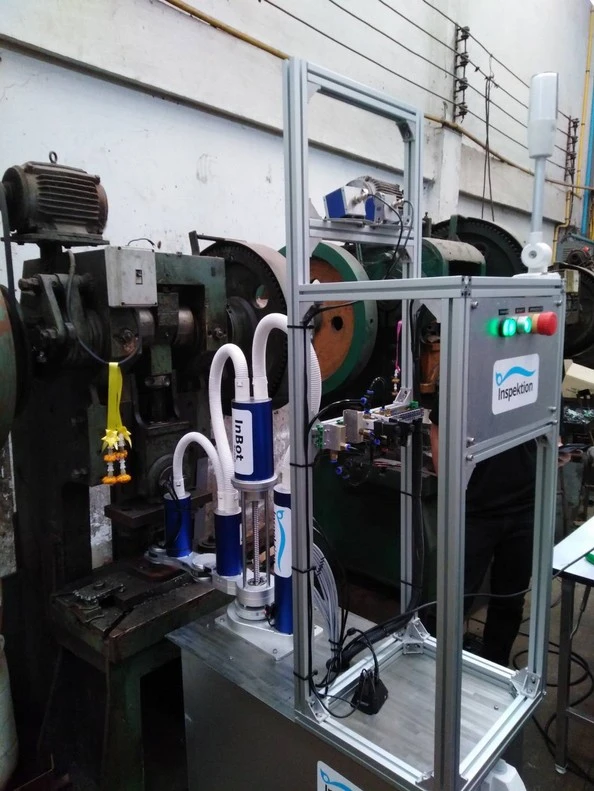
We delivered 1 prototype set, together with a final report and an operation and maintenance manual, and transferred operating know-how to the private company participating in the project. The project's assessment form dated 15 March 2019 records that the machine was fully assembled, that its operation could be tested according to the specified functions, and that it had a safety protection system, with recommendations to adjust the earth wire and signal lights. The on-site testing carried out consisted of testing the robot arm program with a steel stamping press.
How the brief came about
This prototype robot arm picks and places workpieces at positions that technicians with basic skills can set themselves from a screen. The brief was a robot arm whose machine price and maintenance costs are within reach of SMEs. The project report states that the target group had a problem of reliance on manual labour. For small and medium-sized factories, investing in a robot arm means considering the machine price, the maintenance costs and the people who can set up the machine.
This work falls under the government's 2018 technology product development program for import substitution, which supports developing technology products domestically instead of importing them. The private company that will use the machine co-invested in the project, while we designed, built and tested the prototype.
Requirements and constraints
The prototype had to meet the project's requirements, within a contract period of 8 months. The main requirements and constraints are as follows.
- A 4-axis SCARA robot arm (1 set), with a working radius of at least 400 millimetres and a workpiece load of no more than 1 kilogram
- Technicians, electricians or staff with basic computer skills must be able to set it up, without a specialist
- The project handbook specifies features for the robot arm to learn, with AI, to pick workpieces of similar size, shape and weight, to be controlled over a LAN (the factory's internal network), and to store its operating status history on a Cloud Server (an online data storage machine)
- The robot arm rotates quickly and with force, so it needs a safe area around its working radius and warning signs to keep people and objects away
- Contract period of 30 March – 30 November 2018, with progress reports, a final report, and an operation and maintenance manual
How was this prototype robot arm designed so that technicians who are not robotics specialists can set it up?
Users set up the robot arm from a software screen on a computer by adjusting the angle of each axis joint, then check its posture in the simulation system (Simulation) with a 3D model of the arm before running the real machine. We chose this approach because the project's target users are technicians with basic skills, not robotics specialists. The steps in the operation manual are as follows.
- 1
Install the controller on the robot arm
Connect the controller to the robot arm, then open the software and load the arm's 3D model into the system.
- 2
Set the movement positions
Enter setup mode to define the robot arm's postures and positions for each job by adjusting the angle of each axis joint on the screen.
- 3
Test with the simulation first
Command the robot arm to move in the simulation to check its posture before running the real machine.
- 4
Run the real job
Once the posture in the simulation is correct, command the robot arm to pick the workpiece from the set position.
Specified features, not test results
Learning to pick with AI, control over a LAN and history storage on a Cloud Server are listed as features in the project handbook. We do not yet have test result documents for these features, so we do not present them as working capabilities.
Deliverables
We delivered 1 robot arm prototype set, with documents and transfer of operating know-how as set out in the contract. The delivered items are as follows.
- A 4-axis SCARA robot arm mounted on a control cabinet using an NVIDIA TX1 processing board
- Software for setting positions and simulating the operation with a 3D model
- Progress reports and a final report
- Operation and maintenance manual
- Transfer of operating know-how to the private company participating in the project
- Testing the robot arm program with a steel stamping press at a metal stamping factory
Verifiable prototype assessment results
The project's assessment form dated 15 March 2019 records 3 results for the 4-axis SCARA robot arm prototype: the machine was fully assembled as a complete machine, its operation could be tested according to the specified functions, and it had a safety protection system. The form also includes recommendations to adjust the earth wire (ground) and signal lights.
After the assessment, we placed the sponsoring agency's sticker on the machine and filmed a demonstration clip of it working. The on-site testing carried out consisted of testing the robot arm program with a steel stamping press. Use for picking workpieces on a production line requires further testing with real workpieces, and the robot arm's command circuit and control screen have items for improvement after the project closed. This page reports only results backed by documents.
What we learned
This work offers 3 principles for developing robot arm prototypes and prototype machinery.
- Separate tested features from target features. In this work, AI, control over a LAN and the Cloud Server are listed as features in the handbook but have no test results, so prototype handover documents should state clearly which items have been tested.
- A robot arm prototype must pick real workpieces at a real machine before it can be called ready for use. Testing the program with a steel stamping press is a first step; it is not yet the same as picking workpieces on a production line.
- Electrical and safety systems are part of the design work from the start. The technical recommendations in this work's assessment concerned the earth wire and signal lights, while the safe area around the robot arm's radius was part of the project's risk assessment.
How can you apply this approach to your project?
If you want to try a robot arm on your own pick-and-place work, or develop a machine prototype in a research project, you can use the same approach as this case: set postures from a screen, simulate the operation before running the real machine, and deliver with a manual and transfer of operating know-how. What needs adjusting is the robot arm's specification, when your workpieces are heavier or further away than this prototype was designed for.
Reusable parts and parts that need adapting
| Part of the work | Reusable | Needs adapting when |
|---|---|---|
| Setup and simulation | Set joint angles from a screen and simulate with a 3D model before running the real machine | If your robot arm is a different model, you need the 3D model of that arm |
| Robot arm requirements | SCARA robot arm for horizontal pick-and-place work | If your workpieces weigh more than 1 kilogram or you need a working radius different from the one designed, the robot arm's specification must be redefined |
| On-site testing | Test the program with real machinery before delivery | For use on a production line, plan additional testing of picking real workpieces |
| Documents and delivery | Progress reports, a final report, a manual and transfer of operating know-how | If your project has funding conditions or an assessment form that differ from this case, the document list must be agreed anew |
- Clearly specify the workpieces the robot arm will pick, including size, shape and weight
- Prepare the installation area, electrical system and earth wire before testing
- Define a safe area around the robot arm's working radius and put up warning signs
- Agree the deliverable documents from the start, such as reports, an operation and maintenance manual, and technology transfer
Images of the system and how it works
Technology used
Frequently Asked Questions
What can this prototype robot arm do?
This prototype robot arm picks workpieces from positions the user has set. The user sets it up through software and simulates the operation with a 3D model before running it for real. Learning to pick with AI, control over a network and history storage on a Cloud Server are features specified in the project handbook and have no test results yet.
Do you need a robotics specialist to use it?
The project aimed for technicians, electricians or staff with basic computer skills to be able to set it up. We transferred operating know-how to the private company participating in the project, together with the operation and maintenance manual. However, the prototype's control screen still needs further improvement after the project closed.
Where did this project get its funding?
This project received its budget from the Bureau of Technology Promotion and Transfer, Office of the Permanent Secretary, Ministry of Science and Technology, under the 2018 technology product development program for import substitution, with the private company that will use the machine co-investing.
What needs to be prepared before testing the robot arm on site?
Clearly specify the workpiece the robot arm will pick, including its size, shape and weight. Get the installation area, electrical system and earthing ready, and define a safe zone around the working radius with warning signs. We then assess the actual workpiece and site before proposing an approach.
How much does it cost to develop a robot arm or prototype machine of this kind?
There is no standard price. The price depends on the workpiece, the scope of work and the project's conditions. Please contact us for a quotation once we have assessed your requirements.