AI Camera System for detecting and counting plastic bottle caps on a conveyor belt, with an air-based defect sorting mechanism for plastic cap manufacturers.
This project uses an AI camera to inspect and count plastic water-bottle caps on a conveyor for a plastic-cap manufacturer. We installed 1 LearningCam Inspection Cam above the conveyor to detect caps with excess flash or incomplete molding, count good and defective caps, and designed air-jet rejection of defective caps. Model adjustment for other cap colors and confirmation of full-system delivery are still in progress
- Industry
- General manufacturing
- Year
- 2025–2026
- Scope of work
- Supply of 1 LearningCam camera (Inspection Cam model), a Wi-Fi 6 router, an IoT Gateway and a Controller and Reject set. Installation of a camera jig/fixture above the conveyor and on-site system configuration. Training an AI model on real images of the factory's caps, and testing on the customer's conveyor.
Summary
- We installed 1 LearningCam camera (Inspection Cam model) above a plastic cap manufacturer's cap conveyor to inspect and count water-bottle caps, in place of manual re-inspection and counting.
- An AI model trained on real images of the factory's caps judges each cap as good (OK) or defective (NG) based on flash and incomplete moulding, and the Controller and Reject set is designed to blow defective caps out with air.
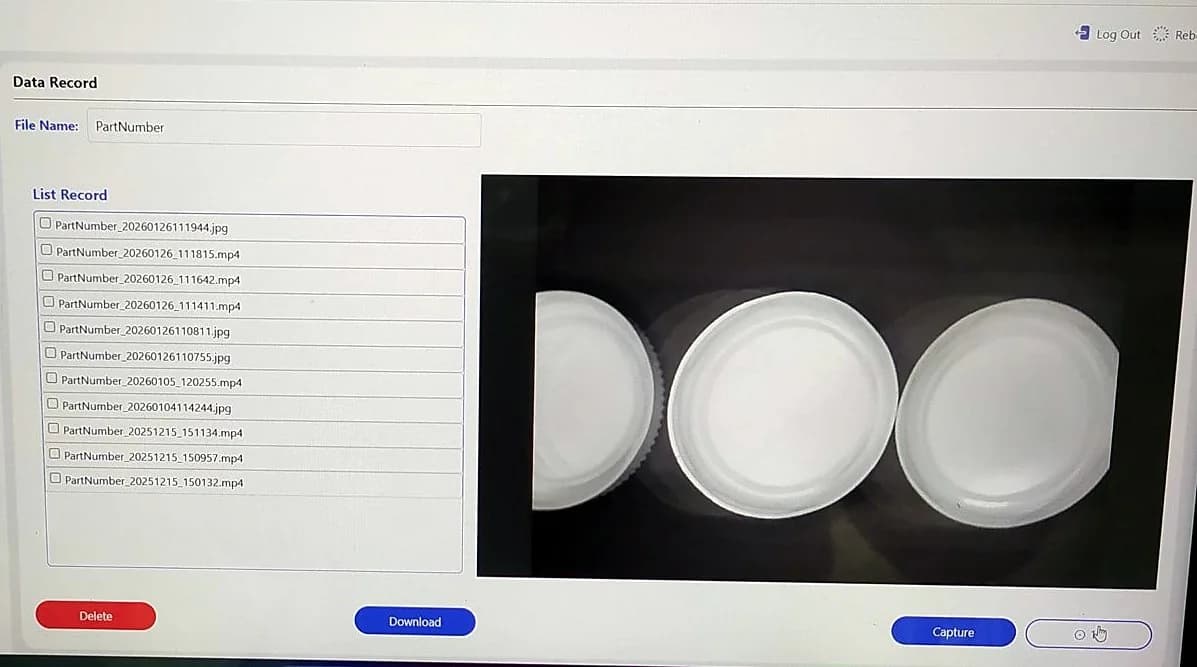
- Users open the live image, OK/NG counts and the inspection report page in a web browser on a tablet or PC, because the inspection and counting software is built into the camera.
- On-site test result: about 398 white caps per minute, continuously for 120 minutes, meeting the criteria in the internal test report form. This is not yet an acceptance result for the complete rejection system.
- In progress: blue caps tested with the white-cap model have not yet reached the criteria, so there is a plan to train separate models by cap colour.
The on-site brief
Water-bottle caps leaving the plastic injection machine travelled along a conveyor, and staff then re-inspected and counted them by hand. The customer wanted a camera to inspect every cap, find caps with flash or incomplete moulding, reject defective caps immediately and count good and defective caps for production reporting, with support for both white and blue caps.
What we did
We installed a LearningCam camera (Inspection Cam model) above the conveyor. An AI model trained on real images of the factory's caps judges each cap as good (OK) or defective (NG), and the camera is designed to send a signal to the Controller and Reject set to blow defective caps off the conveyor with air. Users view the live image, counts and inspection reports in a web browser.
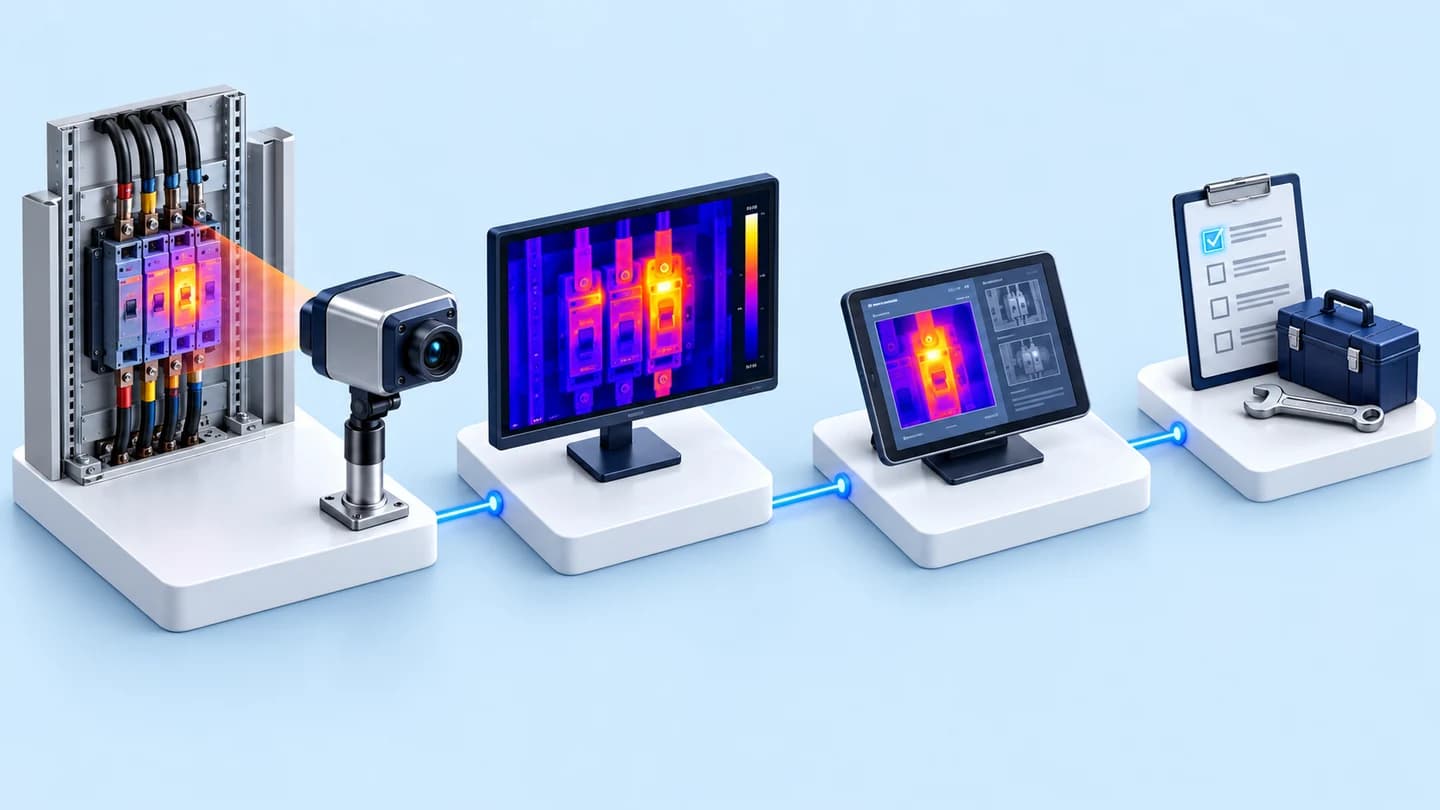
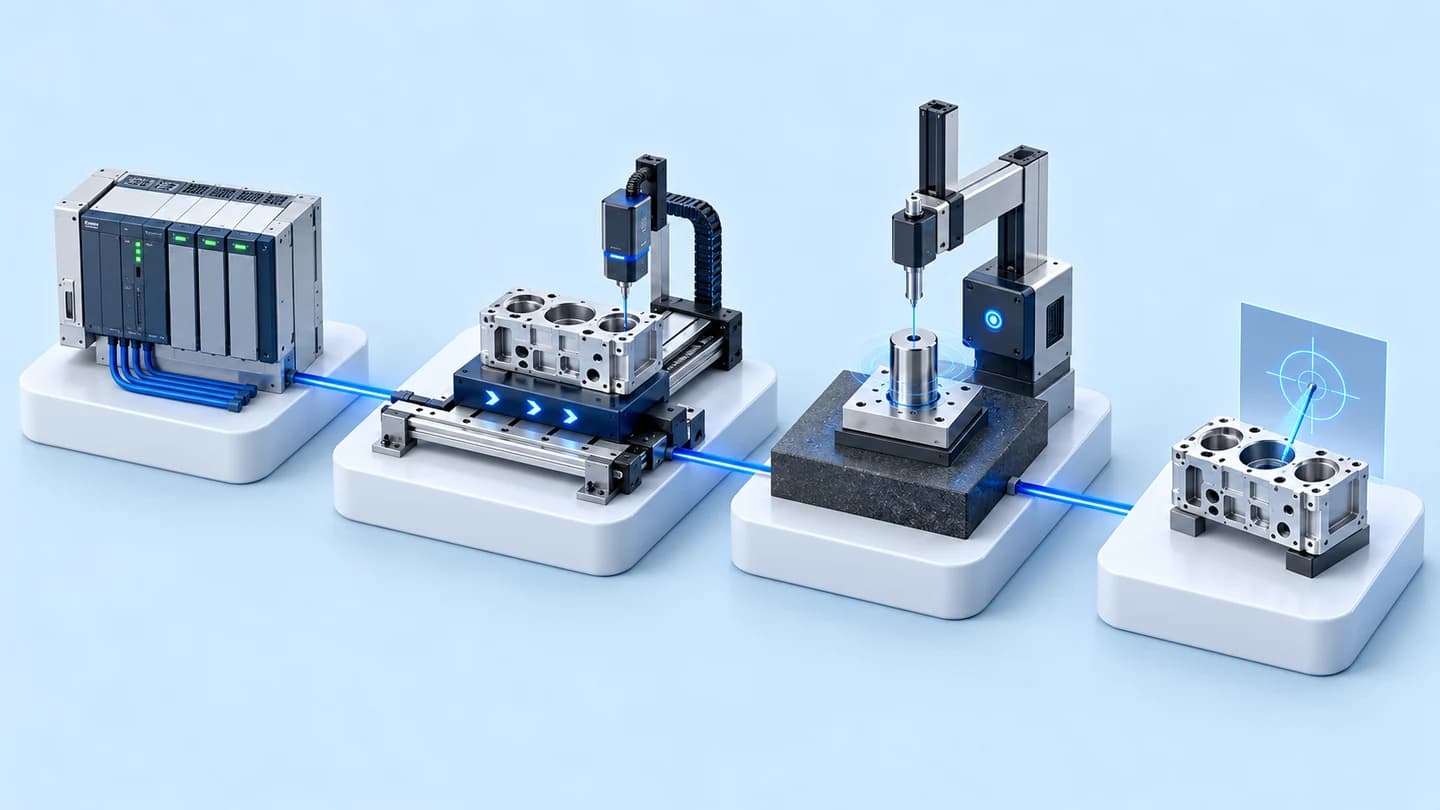
- Caps from injection machine run on conveyor belt
- LearningCam model Inspection CamCaptures cap images continuously
- AI Model decides OK/NGFlash / incomplete moulding
- Controller and Reject UnitDesign approach for rejecting defective caps with air
- Count and Report of OK/NGViewed in a web browser
Current status
In on-site testing from January to March 2026, the system inspected and counted about 398 white caps per minute, continuously for 120 minutes, meeting the criteria set in the internal test report form. Blue caps using the white-cap model have not yet reached the criteria. Work is in progress to adjust the model for other cap colours and to confirm delivery of the complete system.
How the brief came about
The brief in this case was for a camera to inspect and count plastic water-bottle caps on a conveyor, in place of manual re-inspection and counting. The customer is a plastic cap manufacturer. Caps leaving the plastic injection machine travel along a conveyor, and staff then re-inspect and count them by hand.
The defects the customer wants rejected are flash and incompletely moulded caps. The customer also wants counts of good and defective caps as production reporting data, not just the removal of defective caps.
What is flash?
Flash is the thin plastic that spills out along the mould joint during injection moulding. In this case, caps with flash or incomplete moulding count as defective (NG).
Requirements and constraints
The system must inspect the caps passing along the conveyor and support more than one cap colour. Its main requirements are as follows:
- Inspect every cap passing along the conveyor and find caps with flash or incomplete moulding
- Reject defective caps from the conveyor as soon as they are detected
- Support both white and blue caps
- Count good (OK) and defective (NG) caps for production reporting
- View the live image and counts, and configure the system, in a web browser on a tablet or PC
How does this system inspect and count caps on the conveyor, and how is the rejection of defective caps designed?
The system uses a LearningCam camera (Inspection Cam model) above the conveyor. The camera captures images of the caps continuously, uses an AI model to judge whether each cap is good or defective, and then counts them. Under the design approach, when a defective cap is found, the camera signals the Controller and Reject set (control and rejection unit) to blow that cap off the conveyor with air.
- 1
Caps travel past the camera on the conveyor
Caps leaving the injection machine travel along the conveyor, passing under a LearningCam camera (Inspection Cam model) held above the conveyor by a camera jig/fixture.
- 2
The AI model judges OK or NG
The camera captures images continuously. An AI model trained on real images of the factory's caps checks whether each cap has flash or incomplete moulding, then judges it as good (OK) or defective (NG).
- 3
Defect Sorting Mechanism Using Air Blowing
Under the design approach, when a defective cap is found, the camera signals the Controller and Reject set so that a solenoid valve (an electric valve that opens and closes the air supply) blows that cap out with air. Good caps continue as normal.
- 4
Counting and display
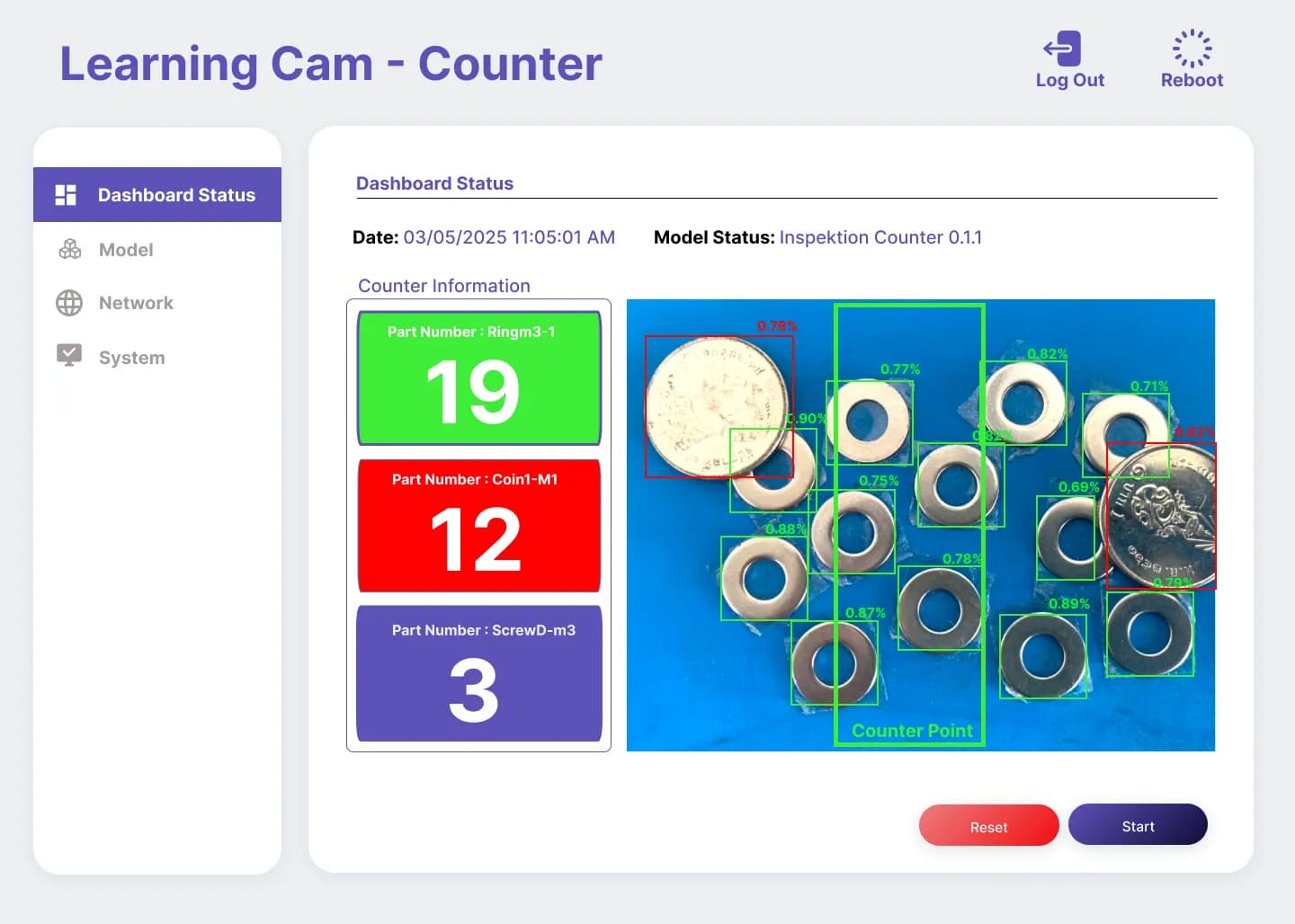
The software built into the camera shows the live image with OK/NG counts. Users open a web browser on a tablet, screen or PC and enter the IP address (the camera's address on the network), connecting through a Wi-Fi 6 router and an IoT Gateway (a device that connects on-site equipment to the network).
- 5
View the inspection report
The production team opens the inspection report page (Inference Report) to summarise results by time period and by model, and can start or stop inspection from the production office over the network.
We chose a camera with inspection and counting software built in, so users can view results in a web browser without setting up a computer beside the line. We trained the model on real images of the factory's caps because the defects to catch are those that arise from this factory's injection moulding.
Deliverables
We supplied the equipment, installed the system on the customer's conveyor and trained an AI model for white caps. The items in scope are as follows:
- 1 LearningCam camera (Inspection Cam model) with built-in software that shows the live image and OK/NG counts
- Controller and Reject set with a solenoid valve for rejecting defective caps with air
- Wi-Fi 6 router and IoT Gateway to connect the camera to a tablet or PC in the factory
- Installation of a camera jig/fixture above the conveyor and on-site system configuration
- AI model for inspecting cap defects, trained on real images of the factory's caps
- Inspection report page (Inference Report) for viewing results by time period and by model
Results confirmed by on-site testing
In on-site testing from January to March 2026, the LearningCam camera (Inspection Cam model) inspected and counted about 398 white caps per minute, continuously for 120 minutes, and met the criteria set in the internal test report form. This result is a test of inspection and counting. It is not yet an acceptance result for the complete rejection system.
Blue caps tested with the white-cap model have not yet reached the criteria, so there is a plan to train separate models by cap colour. Work is in progress to adjust the model for other cap colours and to confirm delivery of the complete system.
During testing, a weak Wi-Fi signal made the live image opened from the production office stutter, while start and stop commands and the counts remained usable.
What we learned
This work offers the following principles for AI camera inspection of plastic injection-moulded parts:
- A model only works with the kind of part it was trained on. In this work, the model trained on white caps has not yet reached the criteria when used on blue caps, so a new cap colour or variant must be treated as a new round of model training and testing.
- Confirm inspection results separately from rejection results. Cap inspection and counting can meet the criteria first, but the air rejection set needs its own acceptance test, because the result depends on both the model's decision and the air-blast mechanism.
- Core work should not depend on the live image. In this work, a weak Wi-Fi signal made the live image stutter, but start and stop commands and the counts remained usable, so the signal at the viewing location should be surveyed before installation.
How can you apply this approach to your plastic injection line?
If your line produces caps or small plastic injection-moulded parts that travel on a conveyor, you can use the same approach as this case: a camera above the conveyor, a model trained on real parts, OK/NG counts and the design approach for an air-blast rejection set. What needs adapting is the model for each part colour or variant, and the mounting positions of the camera and the air nozzle.
Reusable parts and parts that need adapting
| System part | Reusable | Needs adapting when |
|---|---|---|
| Camera and installation | LearningCam camera (Inspection Cam model) above the conveyor, with a camera jig | If the conveyor or part size differs from this case, the jig and camera angle must be redesigned |
| AI model | Method of training the model on real images of the factory's parts | Parts in a different colour or variant, or with other types of defect, need image collection, separate model training and new testing |
| Counting and reporting | OK/NG counts and the inspection report page | Sending counts to other factory systems requires an assessment of additional integration work |
| Rejection | Controller and Reject set design approach, blowing air with a solenoid valve (acceptance result still awaited in this case) | In every case, the rejection set needs a separate acceptance test. If the part differs from a cap in shape or weight, the air-blast strength and nozzle position must be retested |
| Network | Wi-Fi 6 router and IoT Gateway | If the viewing location is far from the line, the signal must be surveyed first |
- Prepare good parts and real defective parts of each colour or variant for the team to photograph for model training
- Agree the acceptance criteria before testing, including conveyor speed, test duration and measurement method, looking separately at the rate of detecting defective caps and the rate of wrongly rejecting good caps, not at overall accuracy alone
- Start with the colour or variant produced in the largest volume, and add models for other colours once it meets the criteria
- Test under the real lighting on site, and mount the camera so that the image angle stays fixed
Read more
- LearningCam: Edge AI camera with built-in processing
- Custom system development service
- On-site system installation service
- Case: prototype plastic bottle cap inspection machine with conveyor
- Case: packaging inspection in the FMCG industry
- Article: How AI Vision Inspection helps with quality control
- Article: Counting parts with an AI camera
Technology used
Frequently Asked Questions
What types of cap defect can this system inspect?
In this case, the system inspects caps with flash and incompletely moulded caps, which are defects the factory actually encounters from injection moulding. To inspect other types of defect, sample images of those defects must first be collected and the model further trained.
If the cap colour changes, can the same model be used?
It should not be used without testing. In this case, blue caps tested with the white-cap model have not yet reached the criteria, so there is a plan to train separate models by cap colour. You should allow time and budget for training models for the cap colours or variants you actually produce.
Does a computer need to be set up beside the line?
Not for inspection and counting. The software is built into the camera, and users open it in a web browser on a tablet, screen or PC by entering the camera's IP. Network equipment needs to be assessed according to the site.
Has this system passed on-site testing yet?
Yes, for inspection and counting of white caps. The internal test report records operation at about 398 caps per minute, continuously for 120 minutes, meeting the set criteria. Blue caps and the acceptance of the complete rejection system are still in progress.
What are the price and installation time?
There is no fixed price. LearningCam camera prices are available on the product page. The rejection set, installation and model training depend on the conveyor characteristics, cap type, number of colours and the defects to be inspected. Contact us to request a quotation.