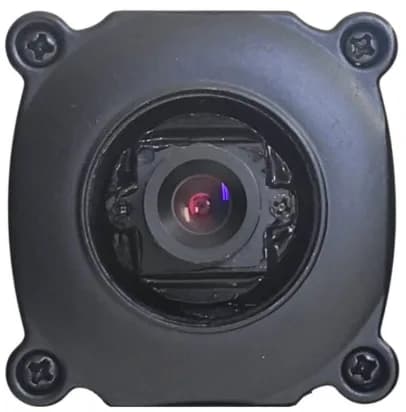
Camera system for detecting cracks in corrugated roof tiles on 2 production lines, for a construction materials factory
Customer: A large manufacturing group in Thailand
This case is a Machine Vision system (inspection using cameras and image-processing software) that looks for cracks on corrugated roof tiles as they travel on conveyor rollers. We installed 8 camera and image-processing sets on 2 production lines at a construction materials factory, using LED lighting with brightness set by tile colour, and ran on-site test operation in 2017.
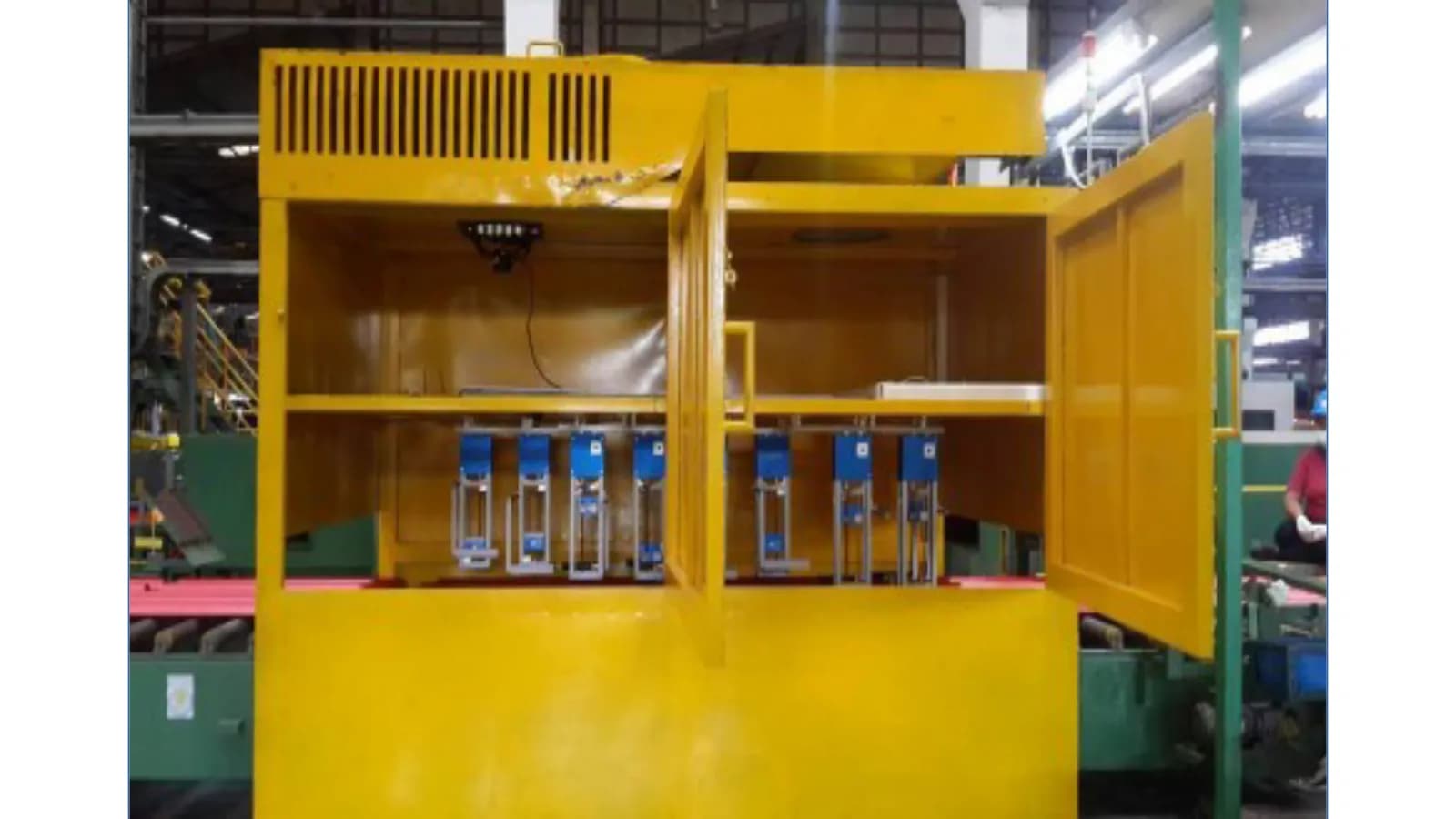
- Industry
- General manufacturing
- Year
- 2016–2017
- Scope of work
- Design of the machine frame, circuits and LED lighting system; installation of 8 sets of cameras and image processing units (4 per line) on 2 production lines; development of the crack detection program; configuration for double-corrugated tiles sized 50x120 and 50x150 cm in 12 colours in total; on-site test runs; and preparation of handover documents with manuals. The project requirements set a target of detecting cracks of approximately 0.5 cm.
Summary
- A Machine Vision system for inspecting double-corrugated roof tiles for cracks was installed on each of the 2 production lines of a construction materials factory, using 8 sets of cameras and image processing units (4 per line).
- PWM-controlled LED lighting has its light level set separately for each tile colour, and we tuned the sensors to 12 tile colours, because light that suits one colour may not suit another.
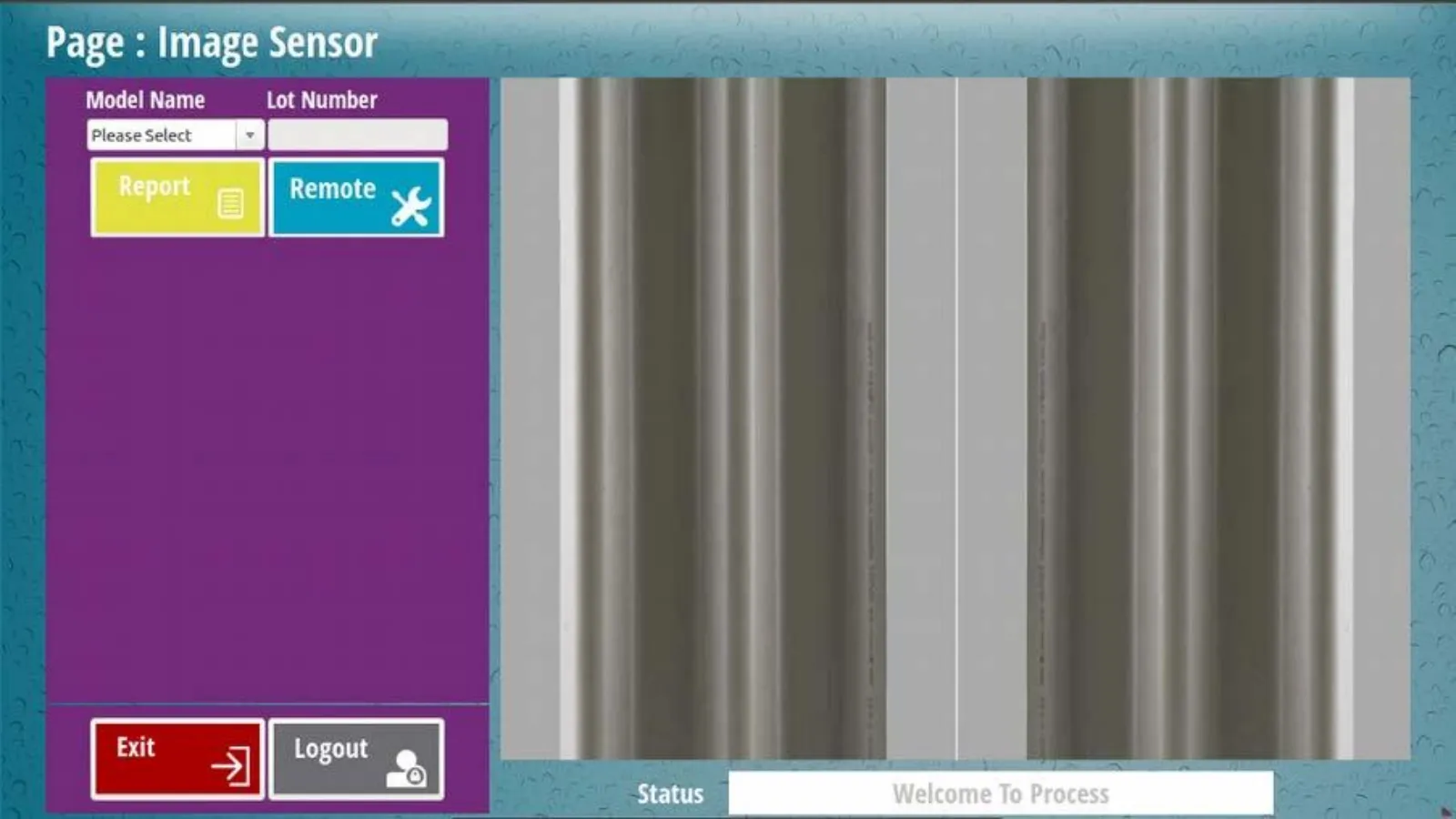
- Light adjustment commands from the central machine (Center) over the LAN network have a test record on line B, while the program screen lets users select the product model, enter the lot number and open the inspection report.
- Confirmed test results: the system passed the equipment check, the test run and testing against the program manual on site in 2017, and the project has been closed.
- The project requirements set a target of detecting cracks of approximately 0.5 cm. The document set includes a Cpk report form, but there is not yet any document directly confirming test results against this target.
The on-site brief
The factory needed to detect cracks on double-corrugated roof tiles travelling on the conveyor rollers of 2 production lines running side by side. The tiles come in several colours, so lighting that shows cracks clearly on one colour may not suit another.
What we did
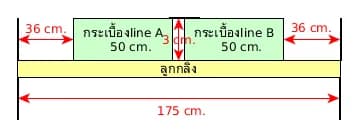
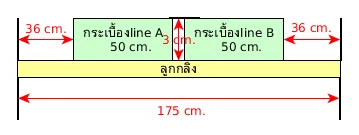
We designed an inspection machine frame straddling the conveyor rollers of the 2 lines, installed cameras with image processing units, 4 sets per line for 8 sets in total, and used PWM-controlled LED lighting with light levels set separately for each tile colour. The program screen lets users select the product model, enter the lot number and open the inspection report.
- Light sensor (opto sensor)Detects tiles passing through
- Image sensor camera+ PWM-controlled LED lighting
- Image processing unitCrack detection program
- Central machine (Center)Commands light adjustment over LAN (tested on line B)
- Program screen and inspection reports
Results
We installed the crack inspection sets on each of the 2 production lines, tuned the sensors to 12 tile colours and carried out test runs following the program manual on site in 2017. The work was delivered with documents and manuals, and the project has been closed.
How the brief came about
The task in this case was to inspect double-corrugated roof tiles for cracks using cameras while the tiles travel on the conveyor rollers of 2 production lines placed side by side. The customer is a construction materials factory producing tiles in several colours, from grey, red and green through to pearlescent.
The tile colours make this task harder than inspecting a single-colour workpiece. Lighting that shows cracks clearly on one tile colour may not suit another, so the system has to adjust the lighting to match the product being made.
Requirements and constraints
The system has to inspect tiles as they travel on the conveyor rollers. The main requirements and site conditions to handle are as follows.
- Inspect each of the 2 production lines placed side by side, with an inspection machine frame installed straddling the conveyor rollers.
- Support 2 sizes of double-corrugated tile: 50x120 cm and 50x150 cm.
- Support 12 tile colours, each of which needs its own sensor tuning and light level setting.
- The project requirements set a target of detecting cracks of approximately 0.5 cm.
- Light from outside the cabinet must not interfere with the tile detection point or the imaging point, because external light strikes the tiles at some points on site.
How does this system inspect tiles of several colours for cracks?
This system inspects tiles of several colours for cracks by using LED lighting with brightness levels set separately for each colour, then having the camera and image processing unit at each point look for cracks in the images. Each line has cameras with image processing units, 4 sets per line for 8 sets in total, and every set connects to the central machine (Center) over the LAN network.
We chose to adjust the lighting rather than use a single light value for every colour, because surfaces of different colours reflect light differently. PWM-controlled LED lighting can be set in fine steps and the same values can be recalled for reuse, so the system was designed to store the light level for each colour for reuse when the production colour changes.
- 1
Detects tiles passing through
A light sensor (opto sensor) detects that a tile is passing through the inspection point.
- 2
Light according to tile colour
The LED lighting uses the brightness level set for the colour in production. The central machine sends light level adjustment commands to the image processing units, with a test record on line B.
- 3
Capture images and look for cracks
The image sensor camera captures images of the tile surface, then the image processing unit checks each image using the crack detection program.
- 4
Display results and store reports
The program screen lets users select the product Model Name, enter the Lot Number and open the Report menu to view inspection results.
What is PWM?
PWM (Pulse Width Modulation) controls the brightness of LED lighting by switching the light on and off very quickly and adjusting the proportion of time it is on. This method allows brightness to be set in fine steps and the same values to be recalled for reuse, so it suits work where the lighting has to change according to the colour or model of the workpiece.
Deliverables
We delivered crack inspection sets for 2 production lines, from the machine frame and circuits through to the program and documents. The main items are as follows.
- Inspection machine frame straddling the conveyor rollers of the 2 lines, designed by us along with its circuits and wiring.
- 8 sets of image sensor cameras and image processing units, 4 per line.
- Light sensors (opto sensors) for detecting tiles passing through.
- PWM-controlled LED lighting with settings for 12 tile colours.
- A central machine (Center) connected to every set over the LAN network.
- The crack detection program, plus a screen for selecting the product model, entering the lot number and opening inspection reports.
- Handover documents with manuals, and a process capability (Cpk) report form in the project document set.
Results confirmed by on-site testing
The confirmed results are that we installed the crack inspection sets on each of the 2 production lines and tuned the sensors to 12 tile colours, and that the system passed the equipment check, the test run and testing against the program manual on site in 2017. The work was delivered with documents and manuals, and the project has been closed.
This case has no business performance figures, so we report only results backed by documents. Light adjustment commands from the central machine have a test record on line B, while for the target of detecting cracks of approximately 0.5 cm there is not yet any document showing test results directly against this target. The system in this case detects cracks and displays inspection reports. Removing tiles from the line is not among the confirmed results of this work.
What is Cpk?
Cpk (Process Capability Index) is an index showing how consistently a process's measurements stay within the acceptable range. It is calculated from the mean, the standard deviation and the upper and lower specification limits. In this case the Cpk report form is part of the project document set, but it was not used as a pass result for crack inspection.
What we learned
This work offers the following principles for camera inspection of workpiece surfaces on lines producing several colours.
- Light settings belong to each product, not to the machine. When one line produces several colours, light levels must be stored separately by colour, and colours added later must be tuned and tested again before use.
- The workpiece detection point needs the same controlled lighting conditions as the imaging point. In this work, light from outside the cabinet striking the tiles prevented the light sensor from detecting tiles at some points.
- An inspection target must come with a test method that measures the same value as the target, and the test must be repeated when the scope of work changes. In this work, the report form in the document set did not directly show results against the crack size target.
How this approach can apply to your factory
If your factory needs to inspect for cracks or defects on the surface of sheet materials travelling on conveyor rollers, you can use the same approach as this case: detect the workpiece, light it according to the product colour, capture images and look for defects with the image processing unit at each point. What has to be adjusted is the camera distance, the light settings and the inspection method when the workpiece or defect differs from this case.
Reusable parts and parts that need adapting
| System part | Reusable | Needs adapting when |
|---|---|---|
| Image capture on rollers | Machine frame straddling the rollers, cameras and light sensors for workpiece detection | If the workpiece differs in size or shape from double-corrugated tiles, the camera distance and number of camera points must be redesigned. |
| Lighting | PWM-controlled LED lighting and settings by colour | If the workpiece differs in colour or surface from this case, tuning and testing with real workpieces of every colour are needed. |
| Defect detection | Capturing images, then processing them at each camera's processing unit | If the defect to be inspected is not a crack, a new inspection method must be developed and tested. |
| Control from a central point | Central machine connected to every set over LAN | If settings need adjusting on several lines from one point, commands must be tested on every line before acceptance. |
| Reports and connectivity | Screen for selecting the product model and lot number, and inspection reports | If inspection results must be sent to machines on the line or to other systems, the signal connection points and test method must be defined in the scope of work. |
- Compile the full list of product models and colours before starting, using the same names the factory actually uses.
- Define from the outset the defect size to be detected and an acceptance test method that measures the same value.
- Keep external light from reaching both the workpiece detection point and the imaging point.
- Plan for site upkeep, including heat inside the cabinet, dust that needs cleaning and the stability of each camera set's network cable.
- Set user training dates in the delivery plan from the outset.
Prepare workpiece samples in every colour
Tuning the system requires real workpieces in every colour produced, both normal sheets and sheets with cracks. If you prepare a complete set of samples early, the team can set the light levels and test the crack detection program sooner.
Read more
- Custom system development service
- On-site system and equipment installation service
- Consulting and system design service
- Case: camera-based workpiece colour shade comparison system
- Case: can seam inspection, Double Seam Inspection System
- Article: How AI Vision Inspection differs from the human eye
- Article: choosing between Task Cam and a purpose-designed Machine Vision system
Images of the system and how it works
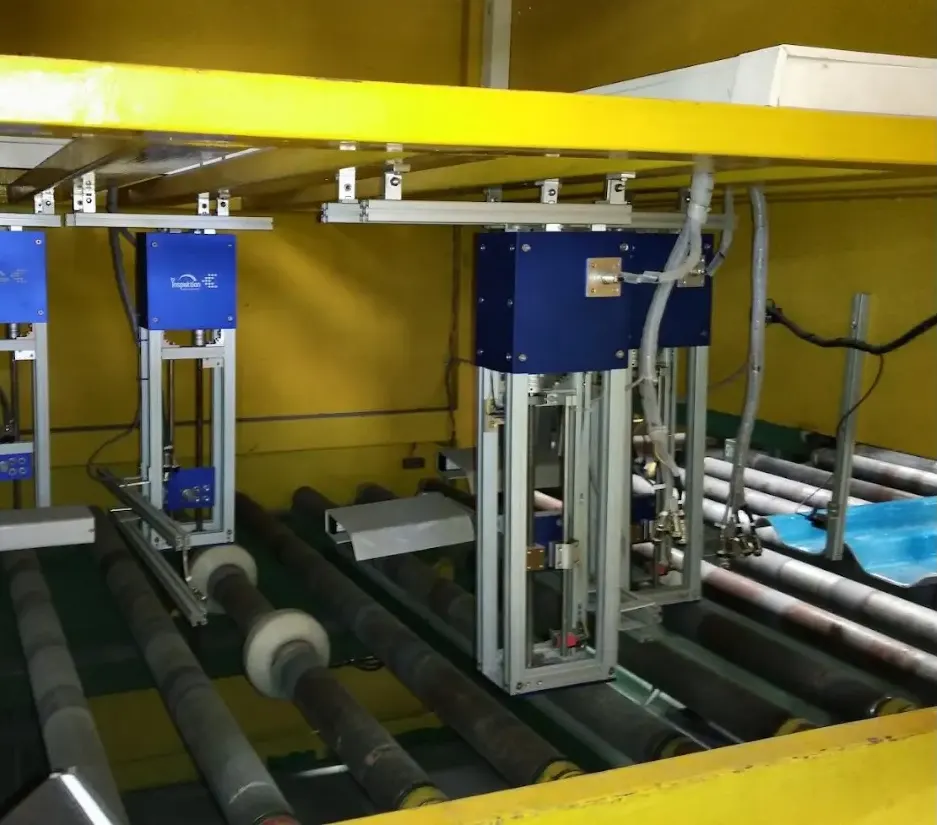
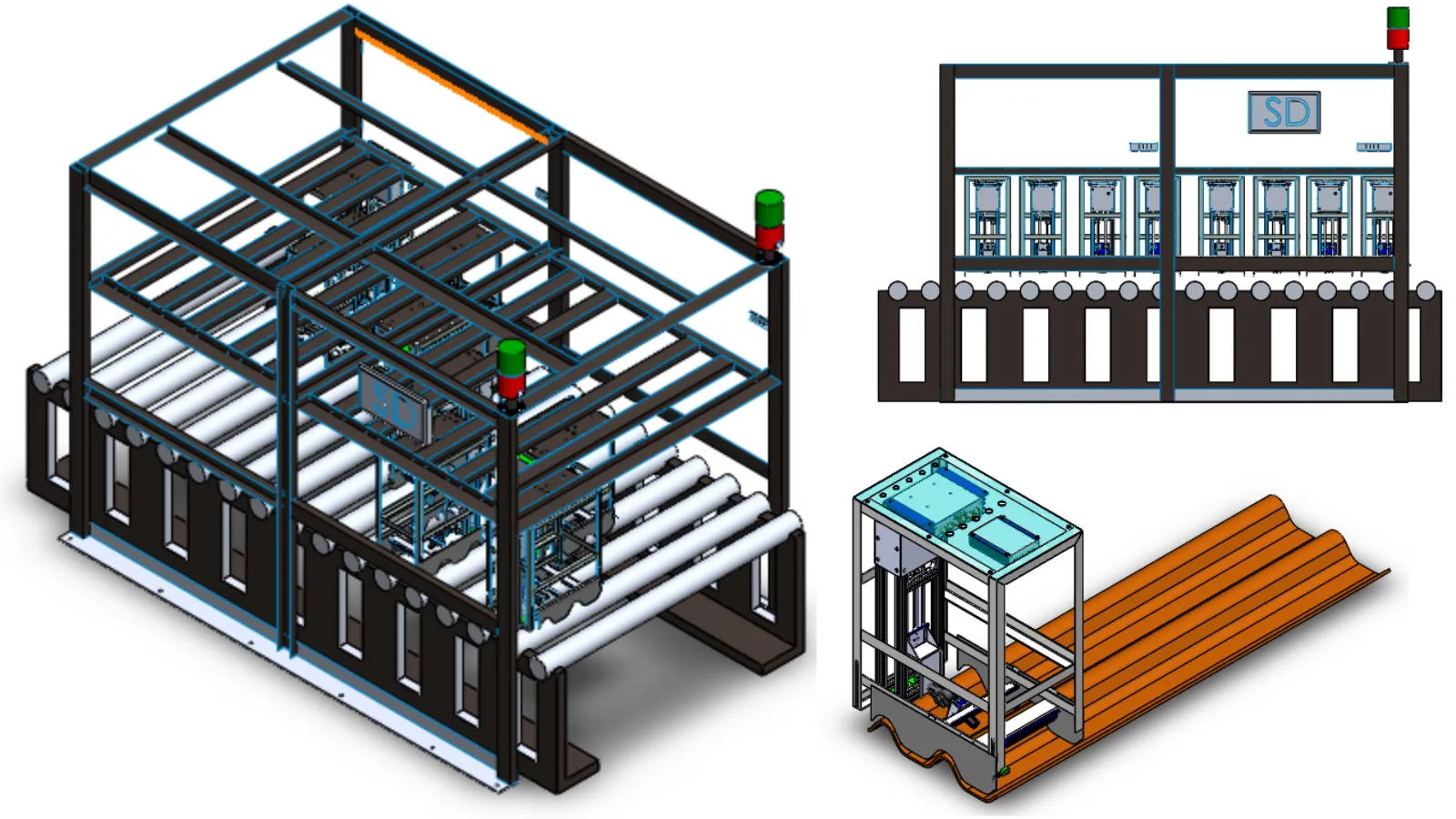
Technology used
Frequently Asked Questions
Can this system be used with ceramic tiles?
This case does not involve ceramic tiles. The system inspects double-corrugated roof tiles sized 50x120 cm and 50x150 cm for cracks. If you need to inspect another type of material, we first have to look at the surface characteristics and the defects to be inspected before we can say how the cameras and lighting should be designed.
How can tiles of several colours use the same system?
The system stores LED light levels separately by tile colour, and in this case we tuned the sensors to 12 tile colours. The central machine (Center) sends light adjustment commands, with a test record on line B. If the factory adds a new colour, settings for that colour must be added to the system and tested before use.
Does the system remove cracked tiles from the line by itself?
In this case, the system detects cracks and displays inspection result reports. Removing tiles from the line is not among the confirmed results of this work. If you need inspection results sent to machines on the line, the signal connection points, the test method and the person responsible for decisions must be defined in the scope of work from the outset.
When was this project carried out, and what is its status?
We carried out the work during 2016–2017, installed inspection sets on both of the 2 production lines, ran commissioning tests on site according to the program manual in 2017, and the project has since been closed.
How much does a system like this cost?
Custom-designed camera inspection systems have no standard price. We estimate the price from the number of lines, the number of camera points, the type and colour of the workpiece, and the size of the defects that must be detected. Please contact us to request a quotation.